
The phone in your service department rings all day. For many advisors, it’s a nuisance, an interruption that pulls them away from the customer standing in front of them. For the dealership, however, that ringing sound is the sound of revenue trying to get in the door.
Get In TouchEvery missed call, every rushed conversation, and every “call back later” is money walking away to a competitor.
The reality of modern automotive retail is that the battle for the customer isn’t won in the service lane; it’s won on the phone days before they ever arrive. Mastering service advisor phone skills is the single most effective way to fill your shop, increase your RO count, and stop the bleed of customers to the aftermarket.
Why the Phone Is Still the Most Profitable Tool in Your Service Department
In an age of text messaging and online scheduling, it’s easy to assume the phone is obsolete. It isn’t. When a customer has a real problem, a strange noise, a warning light, a breakdown, they don’t text. They call. They want a human being to tell them it’s going to be okay.
Service advisor phone training often gets neglected because we assume everyone knows how to talk. But there is a massive difference between “talking” and “converting.” The phone is a revenue-generating tool, not just a message-taking device.
Most Customers Decide Where to Service Their Vehicle Before They Ever Show Up
The first impression of your dealership happens the second an advisor picks up the receiver. If the tone is frantic, rude, or indifferent, the customer assumes the service will be the same. They hang up and call the next shop on Google. That decision happens in seconds. You don’t get a second chance to make a first impression.
Strong Phone Skills Increase Traffic Without Spending a Dollar on Marketing
Dealers spend thousands on mailers and digital ads to make the phone ring. But if your team can’t convert those inbound service calls into appointments, you are lighting that marketing budget on fire. Improving your call conversion rate from 30% to 50% yields more profit than any ad campaign ever could, and it costs nothing but effort and training.
The Real Reason Advisors Struggle With Phone Conversion
Advisors aren’t trying to blow off customers. They are often overwhelmed, undertrained, and reacting to chaos rather than controlling it. The struggle with phone skills for service advisors usually comes down to a lack of structure.
Advisors Aren’t Taught a Consistent Phone Process
Most advisors learn by listening to the guy next to them. If the guy next to them has bad habits, those habits spread like a virus. Without a formal process, every call is an improvisation. One customer gets a great experience; the next gets put on hold for ten minutes. That inconsistency kills trust.
They “Answer Questions” Instead of Guiding the Conversation
When a customer asks, “How much for a brake job?”, an untrained advisor looks up the price and says, “$299.” The customer says, “Okay, thanks,” and hangs up.
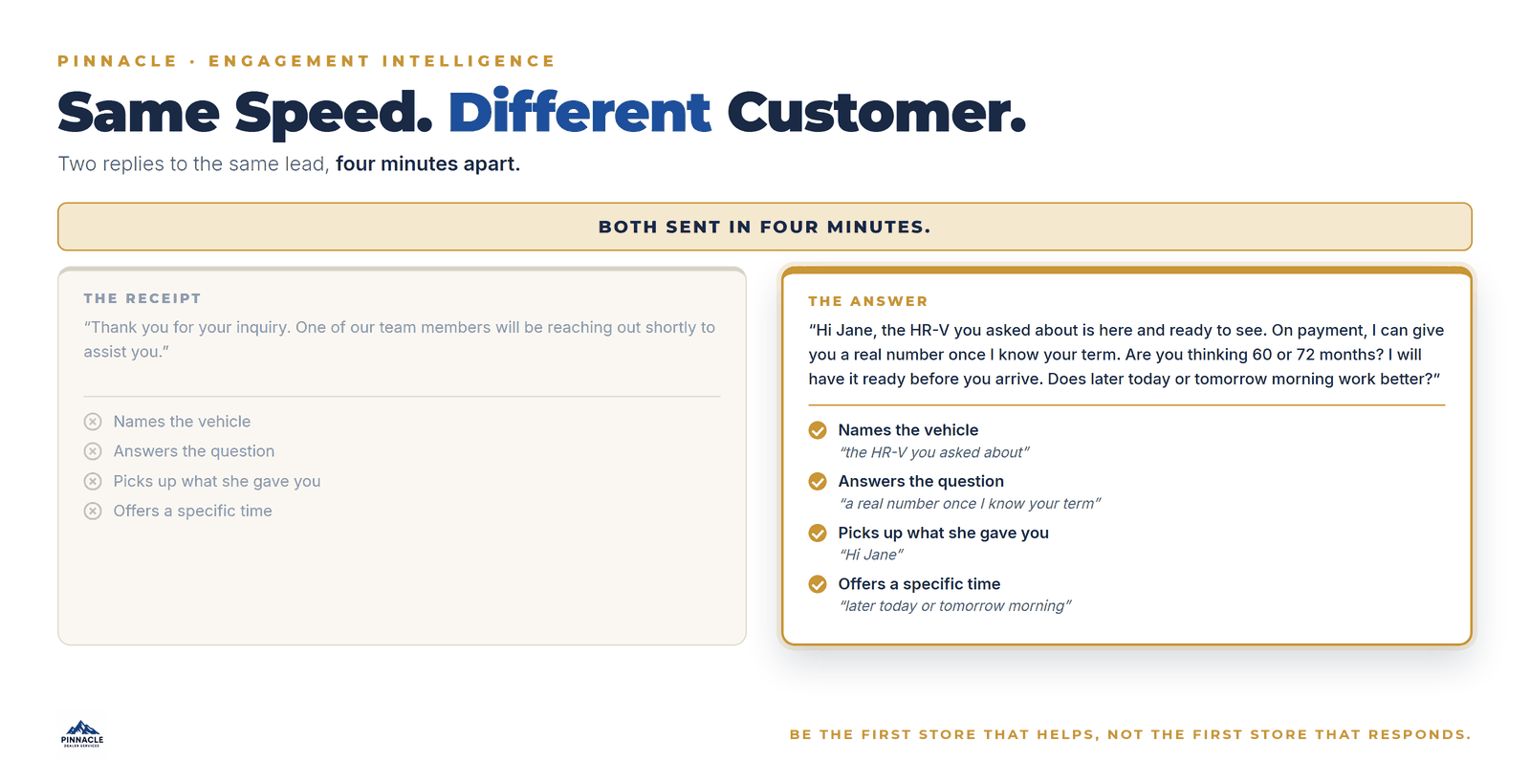
That advisor just acted as a search engine, not a salesperson. A skilled advisor guides the conversation: “I can absolutely help with that. Are the brakes squeaking, or is the pedal pulsating?” This shift moves the dialogue from price to value, which is essential to solve dealership call conversion issues.
They Focus on Information Instead of Securing the Appointment
The goal of the call is not to diagnose the car remotely. It is not to give a precise quote down to the penny. The goal is one thing only: to set the appointment. Advisors who get bogged down in technical details often talk themselves out of the booking.
The Phone Process That Turns Calls Into Booked Appointments
You don’t need a robot script. You need a framework. A structured approach gives advisors the confidence to handle any call while keeping the focus on the appointment. Here is the service advisor call script structure that works.
Step 1, Build Rapport in the First 10 Seconds
“Service, please hold.”
That is how most calls start, and it is a disaster. The greeting sets the stage. It should be energetic and welcoming. “Thank you for calling Pinnacle Motors Service, this is Mike. How can I help you today?” The tone must signal: I am here to help you, not just process you.
Step 2, Ask Purposeful Questions to Understand the Actual Need
Don’t just take the order. Investigate. If a customer says “I need a tune-up,” ask what they mean. “Are you hitting a specific mileage interval, or is the vehicle running rough?”
This does two things: it ensures you book the right work (avoiding misdiagnosis later), and it shows the customer you are a professional who cares about accuracy. This builds immediate authority.
Step 3, Set Clear Expectations for Timing and Next Steps
Before you hang up, eliminate the mystery. “We will need the vehicle for about half a day to diagnose that check engine light properly.” Setting this expectation now prevents the “Is it done yet?” phone calls later. Transparency creates trust.
Step 4, Lock In the Appointment With a Firm, Confident Close
Don’t ask, “When do you want to come in?” That is too open-ended. Offer options. “I have an opening tomorrow at 8:15 AM or Thursday at 1:00 PM. Which works better for you?” This is a classic sales technique that guides the customer to a decision, making appointment-setting calls far more effective.
What Customers Want to Hear When They Call Your Service Department
To improve customer communication on calls, you have to get inside the customer’s head. They are likely stressed. They are worried about money. They are worried about being without their car.
“Tell Me You Can Help Me Without Bouncing Me Around”
There is nothing more frustrating than explaining your problem to a receptionist, then to a scheduler, and then to an advisor. The person who takes the call needs to own the call. If a transfer is absolutely necessary, do it warmly: “I’m going to get you to Bob, our transmission specialist. I’ve already told him about the slipping gear so you don’t have to repeat yourself.”
“Give Me Confidence You Understand My Issue”
Customers fear being ripped off or ignored. When an advisor repeats back the concern, ”So, you hear the noise mostly when turning left at low speeds, correct?”, the customer exhales. They feel heard. That validation is often all it takes to secure the appointment.
“Make the Appointment Feel Easy, Not Like a Chore”
Service is an inconvenience. The phone call shouldn’t be. Service advisor call expectations should revolve around speed and simplicity. Don’t ask for the VIN if you don’t need it right this second. Don’t make them dig for a mileage number if they are driving. Get the name, the number, and the issue. You can fill in the blanks when they arrive.
The Words Advisors Should Use, and Avoid, On the Phone
Words have power. Professional phone skills automotive staff use can de-escalate anger or build value instantly. Conversely, lazy language destroys credibility.
Phrases That Build Trust and Momentum
- “I can absolutely help with that.” (Reassurance)
- “Let’s get that looked at right away so you stay safe.” (Urgency/Care)
- “My technician, Dave, is excellent with electrical issues.” (Building Authority)
- “I have reserved that time specifically for you.” (Commitment)
Phrases That Kill Appointments Before They Start
- “We’re really backed up.” (Translation: Go somewhere else.)
- “I don’t know.” (Translation: I’m incompetent.) Instead, say: “That’s a great question, let me find out for you.”
- “It depends.” (Translation: I’m hiding the price.)
- “Can you hold it?” (Without waiting for an answer.)
How Tone and Pace Matter More Than Any Script
Service advisor call language isn’t just vocabulary; it’s delivery. A monotone voice sounds boring. A fast talker sounds like a hustler.
Advisors need to match the customer’s pace but keep the energy slightly higher. If the customer is frantic, be calm and steady. If the customer is in a rush, be efficient and quick. Mirroring builds rapport faster than any trick in the book.
How Phone Skills Directly Increase RO Mix, Shop Load, and CSI
There is a direct line from the telephone to the bank account. When you increase appointment show rates, you stabilize the shop’s workflow.
Better Conversations Lead to Better Quality Appointments
When an advisor takes the time to ask diagnostic questions on the phone, the repair order is written better. The technician gets a clearer starting point. This reduces “Could Not Duplicate” lines and increases the chances of finding and selling the repair. A good phone call sets up a profitable RO.
Customers Arrive With the Right Expectations (Which Fixes CSI Swings)
Most CSI problems start on the phone. If a customer is told “bring it in at 8” and assumes that means it will be looked at by 8:05, they will be furious when it sits until noon. If the advisor explains on the phone, “8:00 AM is your drop-off time to meet with me; the technician will begin diagnosis by late morning,” the anger vanishes. Improve service department revenue by protecting your CSI scores upfront.
More Booked Appointments = More Opportunities for RO Growth
You can’t upsell a ghost. You need the car in the bay. Advisors who master the phone keep the bays full. Even a simple oil change appointment is an opportunity for an inspection, a tire sale, or a trade-in conversation. The phone feeds the entire dealership ecosystem.
The Mistakes That Cause Customers to Hang Up, or Call Another Dealership
We all know the pain of bad service. In the dealership world, dealership call handling problems are rampant. If you want to avoid phone mistakes service advisors make, look for these red flags.
Putting a Customer on Hold Before You Even Know Why They’re Calling
“Service, hold please.” Click.
This is insulting. It tells the customer they are the least important part of your day. If you must hold, ask permission: “I’m finishing up with a customer, may I place you on a brief hold?” And then, wait for the answer.
Saying “We’re Really Busy Today” Instead of Offering Solutions
Being busy is a good problem for you, but a bad problem for the customer. Never complain about your workload to a client. Instead of “We’re slammed,” try “Our schedule is filling up fast, but I can squeeze you in for a drop-off tomorrow.” Same reality, different framing.
Transferring Calls Without Setting Context for the Next Person
The “blind transfer” is a customer service sin. Sending a caller to Parts or Sales without introducing them forces the customer to repeat their story. It makes your dealership look disjointed and disorganized.
Quoting Repairs Blindly Without Asking Diagnostic Questions
This is the “parts cannon” approach to advising. Customer: “How much for a starter?” Advisor: “$400.”
What if it’s just a bad battery? What if it’s a loose cable? By quoting blindly, you risk losing the job to a cheaper shop, or worse, doing the repair and not fixing the problem. Always pivot to the diagnosis: “A starter is around $400, but I’d hate for you to spend that if it’s just a simple relay. Let’s get it tested first.”
Using Technology to Improve Phone Conversations and Booking Rates
We live in a digital world. Service advisor phone tools and software can support your human talent.
Call Recording and Review Sessions That Actually Teach Something
If you aren’t recording calls, you are flying blind. Automotive call tracking improvement starts with listening. Managers should pull three calls a week, one good, one bad, one average, and review them with the advisor. Don’t use it as a “gotcha” moment. Use it like game tape. “Hear how you hesitated on the price there? Let’s practice a smoother response.”
Integrated Scheduling Tools That Reduce Errors
Advisors shouldn’t be scribbling appointments on sticky notes. Integrated scheduling tools allow them to see shop capacity in real-time. This prevents overbooking (which kills CSI) and underbooking (which kills profit).
Text Follow-Up to Confirm and Reduce No-Shows
The phone call books the appointment; the text confirms it. Automated reminders drastically reduce no-show rates. It also gives the customer an easy way to reschedule if life happens, rather than just ghosting you.
The Manager’s Role in Building a High-Conversion Phone Culture
You cannot expect fixed ops leadership training to stick if the leaders aren’t involved. The Service Manager must be the guardian of the phone process.
Regular Call Coaching Builds Confidence and Consistency
Training isn’t a one-time seminar. It’s a daily habit. Dealership phone process coaching should happen on the drive, in the office, and in meetings. When an advisor hears a peer handle a tough objection perfectly, point it out. “Did you hear how Sarah handled that angry customer? That was a textbook.”
Tracking KPIs Like Conversion Rate, Hold Time, and First-Call Resolution
You manage what you measure. Do you know your department’s appointment conversion rate? Do you know the average hold time? If you don’t track these, you can’t improve them. Share these numbers with the team. Create a leaderboard. Make them care.
Rewarding Advisors Who Follow the Process and Hit Numbers
Incentives drive behavior. Run a spiff for the best call of the week. Give a bonus for the highest appointment show rate. Show your team that you value the phone as much as you value the RO average.
How to Start Improving Phone Skills in Your Service Drive This Week
You don’t need a consultant to start fixing this. Here are quick phone training tips to upgrade service advisor call performance right now.
Practice the First 30 Seconds of the Call Until It’s Automatic
Role-play the greeting. Over and over. It feels silly, but muscle memory matters. If the greeting is strong and energetic, the rest of the call usually flows well.
Build a Short List of Questions Advisors Must Ask Every Caller
Create a cheat sheet. “When did the noise start?” “Is it worse when the engine is cold?” “Have you serviced with us before?” Tape it to the monitor. Force the habit of investigation.
Review Three Calls Per Week as a Team to Strengthen Skills Fast
In your Friday meeting, play real calls. Let the team critique them constructively. “What could he have said differently here?” “Why did the customer hang up?” Collective learning raises the bar for everyone.
Final Thought: The Phone Creates More Opportunity Than Any Marketing Campaign Ever Will
Stop looking for the magic marketing bullet. The opportunity is already ringing on your desk. Service advisor phone training is the highest ROI investment you can make in your service department.
Advisors Who Master the Phone Fill the Service Drive, Day After Day
The advisors who treat appointment-setting calls like sales calls, with professionalism, structure, and empathy, are the ones who write the biggest checks. They control their own destiny because they control the schedule.
And Dealerships Who Train for It Outperform the Ones Who Don’t
Your competitors are likely failing at this. They are putting people on hold. They are quoting prices and hanging up. They are treating the phone like a nuisance.
If you train your team to treat the phone like a profit center, you win. It’s that simple. Pick up the phone, follow the process, and fill the bays.