
Niceness Alone Can’t Close
During a sales call, a representative must be friendly.
After all, the first step to fostering a connection with the customer is being personable.
However, friendliness alone doesn’t close leads.
The Problem With Too Much Friendliness
Dealership calls that sound friendly on the surface can quickly lose momentum.
For example, a customer calls to inquire about a vehicle they saw on the dealership’s website. The customer asks the BDR, “Is this vehicle still available?” and the BDR replies, “Yep!” The customer says, “Okay, thanks!” and hangs up. The BDR was nice, yes. But no next steps were specified.
Reps also get distracted by exchanging pleasantries and being polite, and they forget to get the customer’s information. After a sales call wraps up, the rep says, “Have a great day!” But if they did not ask for the customer’s name, availability, or clarify options, the call failed.
Directness Is Key
Reps tend to over-focus on being nice in order to not sound pushy or pressure the customer. Customers should feel comfortable on the phone with representatives, but when the representative relinquishes too much control, the customer ends up taking over the conversation, which results in a very pleasant call that has no clear outcome.
The Perfect Balance
Dealerships must train their reps to find the balance between being nice and directing the call.
In sales, success means capturing the customer’s contact information, confirming the vehicle of interest, asking about timing, discussing possible trade, and setting an appointment.
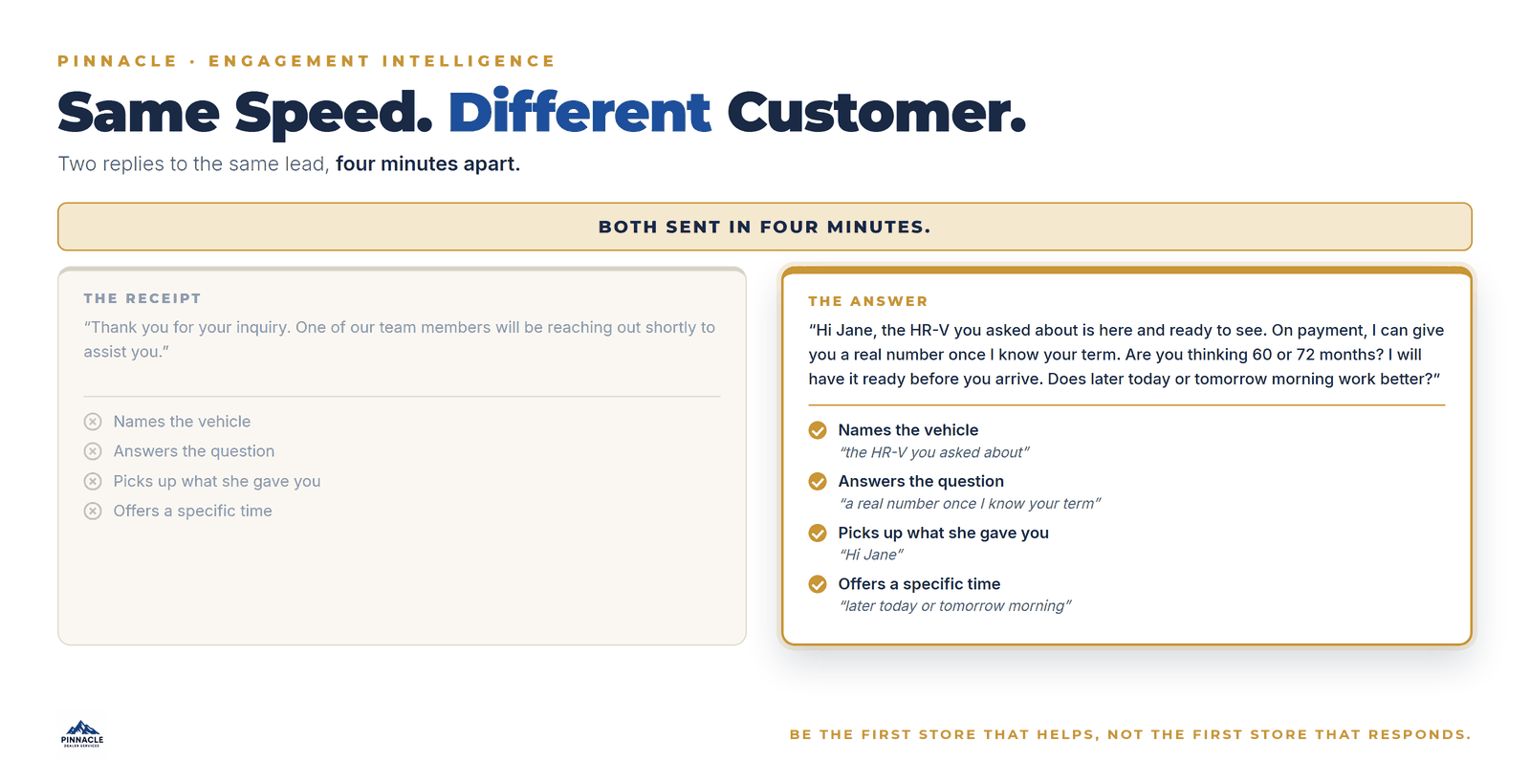
Dealerships must also correct the language reps use on the phone. Reps should ask polite but direct questions, such as, “Are you looking to come in today or later this week?” or, “Is this the vehicle you’d like to see, or are you comparing a few options?” The key is for reps to ask friendly and open-ended questions, but also provide the customer with direction for possible next steps.
Representatives should also avoid ending calls too early. When a customer asks a question, the rep’s answer should open a door to continue the conversation and start to get to the next steps. Reading about call control and running it are two different things. At Boot Camp, three days live in Lake Mary, Florida this September, Matt Lowery puts your BDRs on real calls and coaches the second control slips, then holds it with a 90-day plan and 30/60/90 check-ins. That’s how 15% becomes 22%. Join us here: Pinnacle Dealer Services – Let’s Grow Your Dealership
Toyota of Katy Case Study
After training at Toyota of Katy, phone-ups sold went up 15% to 22%, internet sales closed 6% to 11% over five months, with a set rate of 23.9% against an 18.8% distinct band. 300 phone-ups a month at 15% sold is 45 units; at 22% it’s 66; that’s 21 more units a month, 252 a year. The BDRs were not trained to get nicer, they were trained to get more direct. The improvement highlights the importance of reps taking control of the call.
Summary
The best sales calls happen when the BDR both makes sure the customer feels comfortable and maintains enough control over the call to help them decide what to do next.