
In an era dominated by overflowing email inboxes and constant digital notifications, it might seem counterintuitive that a traditional marketing method like direct mail is not just surviving but thriving. Every day, people sift through their physical mail, and certain pieces grab their attention, compelling them to open them while others are discarded without a second thought. What separates the two? The answer lies deep within the principles of human psychology. Understanding the cognitive and emotional triggers that drive us to engage with physical mail is key to unlocking its power. This isn’t about luck; it’s about science. From the tangible sensation of holding an envelope to the personal connection forged by a name printed on a letter, direct mail taps into fundamental aspects of our human nature.
Get In TouchThis comprehensive guide will explore the psychological triggers that make direct mail an effective marketing channel. We will delve into why our brains are wired to pay more attention to physical objects, how personalization creates a powerful sense of value, and why the simple act of opening an envelope can be a rewarding experience. By understanding these concepts, businesses can craft mail campaigns that not only reach mailboxes but also capture the minds of their audience.
The Tangible Advantage: Why Physicality Matters
One of the most significant advantages of direct mail is its physical nature. Unlike a fleeting digital ad or an email that can be deleted with a single click, a piece of mail is a tangible object. It occupies physical space, has weight and texture, and requires a physical action to be addressed. This physicality has a profound impact on our brains.
Haptic Perception and Cognitive Engagement
Haptic perception refers to the process of recognizing objects through touch. When we hold a piece of mail, our brain’s sensory cortex is activated, creating a much stronger cognitive and emotional connection than simply viewing something on a screen. This tactile engagement makes the message more memorable. Studies in neuroscience have shown that physical media leaves a “deeper footprint” in the brain. When participants in a study were shown advertisements on both a screen and a physical card, fMRI scans revealed that the physical ads produced more activity in brain areas associated with value and desire.
This means that the very act of holding a well-designed mailer, feeling the thickness of the paper, the texture of a special coating, or the shape of a unique die-cut, embeds the brand and its message more deeply in the recipient’s memory. It’s an experience, not just a message. This multi-sensory engagement makes the information easier to recall later, which is a critical factor when a customer is making a purchase decision.
The Endowment Effect in Action
The endowment effect is a cognitive bias where people place a higher value on things they own or physically possess. When a customer receives a piece of direct mail, they are, for a moment, in possession of it. This creates a subconscious sense of ownership. It’s “their” mail. This feeling makes them less likely to discard it immediately and more likely to investigate its contents.
Marketers can amplify this effect through several tactics:
- High-Quality Materials: Using thick, premium paper stock or unique finishes makes the mailer feel more valuable and substantial.
- Inclusion of a Physical Gift: A small, branded item like a keychain, a credit card-sized tool, or even a high-quality magnet can significantly increase the perceived value and trigger the endowment effect.
- Perceived Utility: A mailer that doubles as something useful, like a calendar or a list of important local numbers, is more likely to be kept, reinforcing the brand’s presence in the customer’s home.
This sense of ownership and value is something digital marketing struggles to replicate. An email is never truly “owned” by the recipient in the same way; it exists on a server, can be recalled, or can be lost in a sea of other messages. A physical mailer, however, belongs to the person holding it.
The Power of Personalization
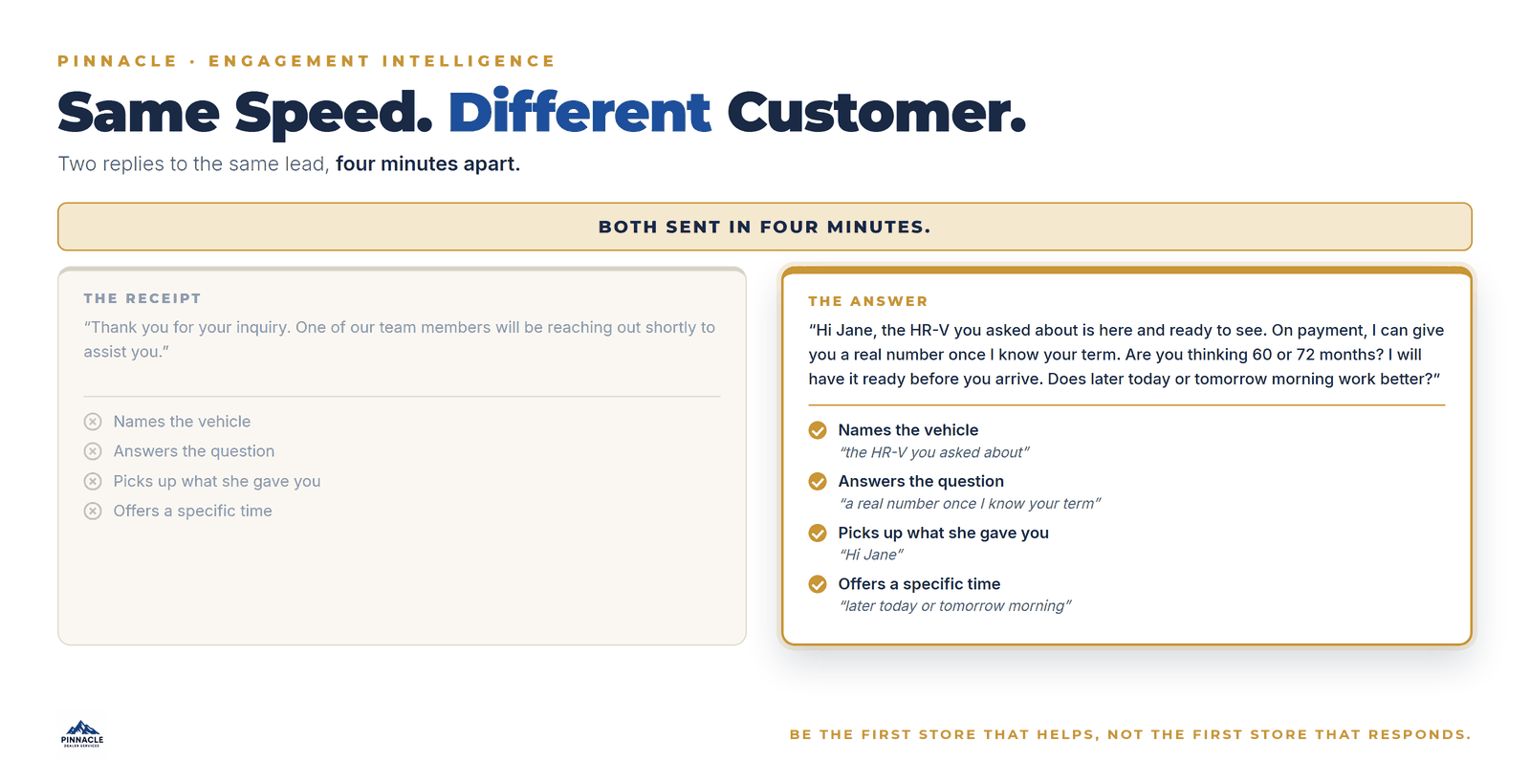
Personalization is arguably the most powerful psychological tool in the direct mail arsenal. Seeing our name on a piece of mail instantly signals that the message is intended specifically for us, cutting through the noise of generic advertising. This creates a one-to-one connection that mass media cannot achieve.
Triggering the “Cocktail Party Effect”
The cocktail party effect is our brain’s ability to focus on a single, personally relevant stimulus in a noisy environment. For example, you can be in a crowded room full of conversations, but if someone says your name, your attention immediately shifts. Direct mail leverages this phenomenon perfectly.
When a person sorts through their mail, they are processing a lot of information. A mailer addressed to “Current Resident” is easily ignored. But a mailer with the recipient’s name prominently displayed, ”John, we have an exclusive offer for you”, acts as a powerful trigger. It tells the brain, “Pay attention, this is for you.”
Advanced personalization goes far beyond just using a name. With the right data, you can tailor the entire message:
- Referencing Past Purchases: “Hi Sarah, we hope you’re enjoying the 2023 sedan you purchased from us last year.”
- Acknowledging Location: “Hey, Springfield neighbors! We’ve got a special event just for you.”
- Customizing Offers: “Based on your interest in SUVs, we thought you’d like a sneak peek at the new model.”
This level of detail communicates that the company knows and values the individual, fostering a sense of loyalty and trust. It shifts the dynamic from a business trying to sell something to a helpful partner offering a relevant solution.
Building Reciprocity and Relationship
When a company takes the time and effort to send a personalized, high-quality piece of mail, it can trigger the psychological principle of reciprocity. This principle suggests that we feel a natural obligation to give something back when we receive something of value.
The “gift” in this case is the personalized attention and the tangible mailer itself. This can create a subtle, subconscious desire to reciprocate, perhaps by visiting the website, making a call, or stopping by the dealership. A personalized offer feels like a favor, and many people feel a social pull to return that favor.
This is a key part of building a long-term relationship with a customer. It shows that the business sees them as more than just a number on a sales sheet. Companies like Pinnacle Sales and Mail, with decades of experience, understand that this relationship-building is fundamental to sustained success. It’s about creating a dialogue, not just a monologue.
The Curiosity Gap: Compelling the Open
Getting the mailer into the customer’s hands is the first step. Getting them to open it is the next critical hurdle. This is where the psychology of curiosity comes into play. Curiosity is a powerful human drive; we are inherently wired to want to fill gaps in our knowledge. A well-designed mailer creates an information gap that can only be satisfied by opening the envelope.
Creating Intrigue with Envelopes and Teaser Copy
The envelope is the first point of contact and your primary tool for sparking curiosity. A plain white envelope might be overlooked, but one with an intriguing design or a compelling question can be irresistible.
Effective strategies for creating a curiosity gap include:
- Asking a Question: “What if your car payment could be lower?” or “Are you paying too much for insurance?” These questions prompt the recipient to seek the answer inside.
- Using Lumpy Mail: An envelope with a noticeable bulge is almost impossible to ignore. The recipient’s mind immediately wonders, “What’s inside?” This could be a key, a small promotional item, or a thick, valuable-looking card. The physical mystery demands to be solved.
- Teaser Copy: A short, punchy line on the outside of the envelope can create powerful intrigue. Phrases like “Your Exclusive Offer Inside,” “A Gift for You,” or “Do Not Bend – Important Documents Enclosed” all suggest value and importance, making the recipient feel they might miss out if they don’t open it.
The Zeigarnik Effect and Unfinished Business
The Zeigarnik effect is the psychological tendency to remember uncompleted or interrupted tasks better than completed ones. An unopened envelope is, in essence, an unfinished task. It sits on the counter, representing an unanswered question or an unknown opportunity. This creates a slight mental tension that the brain wants to resolve. Opening the mailer provides that resolution and closes the mental loop.
Marketers can use this by designing multi-part campaigns. For example, a postcard might arrive on Monday with a message like, “Look for your key in the mail on Wednesday.” This sets up an expectation and an unfinished narrative. When the lumpy mailer with the key arrives, the recipient is primed and curious to see what it unlocks, dramatically increasing the open rate.
The Role of Exclusivity and Scarcity
Two of the most powerful psychological motivators in marketing are scarcity and exclusivity. People are more likely to act if they believe an opportunity is limited or that they are part of a select group. Direct mail is an excellent medium for conveying both of these feelings.
Scarcity: The Fear of Missing Out (FOMO)
Scarcity suggests that a product or offer is in limited supply, increasing its perceived value and urgency. When something is scarce, we assume it must be desirable. Direct mail can effectively create this sense of urgency.
Tactics to leverage scarcity include:
- Limited-Time Offers: “This offer expires on January 31st!” A clear deadline prompts immediate action.
- Limited Quantity: “Only 50 models available at this price.” This implies that hesitation could lead to missing out entirely.
- Event-Based Urgency: “Join our 3-day private sale this weekend only.” This frames the opportunity as a unique, time-sensitive event.
Because a direct mail piece is a physical object, these claims often feel more concrete and believable than a banner ad that seems to run indefinitely. The mailer itself is a physical reminder of the ticking clock.
Exclusivity: The Appeal of Being an Insider
Exclusivity makes people feel special, important, and part of an inner circle. An email sent to a list of thousands can feel impersonal, but a high-quality mailer can create the feeling of a personal invitation.
Marketers can foster exclusivity by:
- Invitation-Only Language: Using words like “Private Invitation,” “For Our Preferred Customers,” or “An Exclusive Preview for…” makes the recipient feel chosen.
- VIP Treatment: Offering a benefit not available to the general public, such as early access to a sale, a special gift with a visit, or entry into a VIP lounge at an event, reinforces this feeling.
- Personalized URLs (PURLs): Including a unique web address like YourDealership.com/JohnSmith directs the recipient to a personalized landing page. This seamlessly bridges the physical and digital experience and reinforces the one-to-one nature of the communication.
When customers feel they are being given special treatment, they are more likely to engage with the brand and develop a stronger sense of loyalty. They are not just a customer; they are a valued member of the community.
Building Trust Through Authority and Consistency
In a world filled with scams and disingenuous advertising, trust is a priceless commodity. Direct mail, when executed professionally, can be a powerful tool for building brand authority and credibility.
Establishing Authority
Authority is the principle that people are more likely to comply with requests from those they perceive as experts or legitimate figures. A professionally designed and printed mailer can signal that a business is established, successful, and trustworthy.
Elements that build authority include:
- Professional Design: High-quality graphic design, clear branding, and error-free copy demonstrate competence and attention to detail.
- Testimonials and Social Proof: Including quotes from satisfied customers or logos of trusted partners (like banks or automotive brands) leverages social proof to build credibility.
- Clear Contact Information: Providing a physical address, phone number, and website shows that the business is transparent and accessible. For example, a mailer might direct someone to a call center for dealerships to speak with a real person, reinforcing legitimacy.
A flimsy, poorly designed mailer can have the opposite effect, signaling a lack of professionalism and eroding trust before the message is even read.
The Mere-Exposure Effect and Brand Consistency
The mere-exposure effect is a psychological phenomenon where people develop a preference for things merely because they are familiar with them. Consistent, repeated exposure to a brand’s logo, colors, and messaging builds this familiarity and, by extension, trust.
Direct mail is an excellent channel for creating these brand impressions. Even if a recipient doesn’t act on the first mailer, seeing the brand’s name and logo in their mailbox contributes to this effect. Over time, when they are in the market for a new car, your dealership’s name will be familiar and feel more trustworthy than an unknown competitor.
This is why integrated campaigns are so effective. When a customer sees your brand on a direct mail piece, in a social media ad, and on a local billboard, the cumulative effect is powerful. Each touchpoint reinforces the others, embedding the brand in the customer’s mind and building a foundation of trust that is crucial for high-value transactions.
Conclusion: A Multi-Faceted Psychological Advantage
Direct mail’s effectiveness is not an accident or a relic of a bygone era. It is rooted in a deep and nuanced understanding of human psychology. From the moment a person holds a piece of mail, a complex series of cognitive and emotional processes begins.
- The tangible nature of mail engages our senses and makes the message more memorable.
- Personalization cuts through the noise and makes the recipient feel seen and valued.
- The curiosity gap created by a compelling envelope or teaser copy is a powerful motivator to discover what’s inside.
- Scarcity and exclusivity trigger our fear of missing out and our desire to be part of an inner circle.
- Professionalism and consistency build the trust and authority needed to convert a prospect into a customer.
By thoughtfully applying these psychological principles, businesses can transform their direct mail campaigns from simple advertisements into compelling, persuasive experiences. It requires a strategic approach that considers every element, from the quality of the paper to the data used for personalization. When done right, direct mail does more than just get opened; it opens minds, builds relationships, and drives real, measurable results.