Marketing a car dealership has always been a multifaceted challenge. With most dealerships rightly focused on delivering great in-store experiences, it’s easy to overlook the importance of what happens outside the showroom. Yet, in today’s competitive landscape, Off-Site Marketing—activities targeted beyond your physical location—has become a crucial component in dealership marketing strategies.
Off-site marketing refers to promotional strategies that occur outside your physical business location. This term is often misunderstood as simply advertising, but it encompasses a variety of tactics designed to build awareness, nurture trust, and drive customer action across multiple channels.
Unlike on-site marketing, which focuses on converting visitors once they enter your store, off-site marketing ensures that potential customers know about your dealership and are motivated to take the first step toward engaging with your business—whether through digital platforms, local events, or physical mail campaigns.
For the automotive industry, this approach goes beyond just targeting car buyers. It also means positioning your dealership as a trusted authority, engaging prospects wherever they are, and nurturing long-term loyalty.
The Importance of Off-Site Marketing for Dealerships
1. Extending Your Reach to New Audiences
One of the main drivers of success in automotive dealership marketing is how far your message travels. By focusing only on foot traffic and in-store promotions, dealerships risk missing out on capturing attention from potential customers in surrounding suburbs, cities, or even rural areas.
Off-site marketing enables dealerships to connect with an extended audience through tools like geotargeted digital ads, local sponsorships, or even regional print media. For instance, placing specific marketing campaigns in neighboring ZIP codes can help raise awareness among segments unfamiliar with your business.
By widening your net, you ensure that your dealership is top-of-mind when these prospects begin their car-buying research.
2. Building Long-Term Brand Recognition
Brand visibility does not happen overnight. It requires consistent, concerted efforts—most of which will occur well before a customer considers purchasing a vehicle. Off-site marketing fulfills this role by serving as the foundation of a dealership’s public image.
For example, an off-site campaign focusing on general consumer education about financing options or maintenance tips through blogs, eBooks, or social media posts builds trust and value. Over time, these tactics position your dealership as more than just a sales hub but as a reliable partner in the customer’s automotive journey.
When customers eventually decide to purchase or service a vehicle, your dealership will already hold a place in their minds—thanks to proactive off-site efforts.
3. Bridging the Gap Between Online and Offline Channels
Most of vehicle buyers research online before setting foot in a dealership. This means your digital presence is just as important as your physical location. Off-site marketing integrates these two realms by ensuring customers seamlessly transition from online engagement to in-store visits.
For example, running geotargeted Google Ads combined with inventory-specific landing pages ensures consumers searching for “dealerships near me” not only find your store but are exposed to your inventory. Additionally, retargeting ads that follow up with website visitors can nudge them toward booking a test drive or requesting more information.
Such efforts prevent common drop-offs in the car-buying cycle, connecting your online strategy to tangible outcomes.
4. Enhancing Cost Efficiency in a Saturated Market
Dealership marketing is a high-stakes endeavor, especially with increased competition from regional rivals. Off-site marketing offers strategies that often deliver significant ROI with lower upfront costs.
For instance, direct mail campaigns targeted at previous customers for trade-ins or upgrades can yield higher response rates than generic mass advertising while requiring a smaller budget. Similarly, creating high-value content marketing pieces can generate long-lasting website traffic without continuous investment in paid ads.
Off-site marketing also provides measurable insights, allowing dealerships to adjust course mid-campaign, making it a cost-efficient alternative when done right.
Off-Site Marketing Tactics Dealerships Should Leverage
To maximize your off-site marketing efforts, it’s crucial to focus on a diverse range of tactics, tailored to meet your customers where they are. Below are five impactful approaches your dealership can implement.
1. Direct Mail Campaigns
Direct mail is one of the oldest yet most effective strategies within dealership marketing. Sending tangible, personalized offers—such as exclusive deals on upcoming sales events or trade-in promos—directly to potential buyers’ homes cuts through digital clutter.
Outlets like Pinnacle Sales & Mail specialize in refining this process for dealerships, enabling you to deliver professional, results-based campaigns.
2. Event Marketing
Car shows, local markets, or even collaborations with malls or community centers offer great opportunities for dealerships to showcase their vehicles in a relaxed, interactive setting. Use these platforms to collect leads, network, and build face-to-face relationships.
3. Social Media Ads
Platforms like Facebook and Instagram are ideal for running region-specific promotions on SUVs, EVs, or other trending models. Importantly, platforms allow microtargeting by demographic data, lifestyle interests, and geography—making your ads highly efficient.
4. Content Marketing & Blogging
Educational content about related topics such as “how to maintain fuel efficiency” or “top tips for first-time car buyers” helps attract organic website visitors through SEO. Once there, you can channel them toward your in-store services with strong calls to action.
5. Geotargeted Pay-Per-Click (PPC) Ads
Driving visitors directly to your site or inventory pages can be seamless with the right PPC campaigns. Use platforms like Google Ads to target nearby users searching for related terms, like “car dealerships near me” or “best trade-in deals.”
Takeaways
Off-site marketing is no longer optional in a competitive automotive sales environment—it’s essential. By investing in strategies that expand your reach, connect with online audiences, and foster loyalty, you’ll position your dealership as a frontrunner in your market.
Partnering with industry experts like Pinnacle Sales & Mail ensures you have the resources and expertise to craft campaigns tailored to your dealership’s needs.
Let’s Grow Your Dealership the Smart Way
You tell us your goals, challenges, and budget. We’ll build a clear, no-nonsense strategy to help you attract more buyers and close more deals.
Customers can tell within seconds when a dealership salesperson is running through memorized scripts instead of having a real conversation. The pacing feels forced, the language sounds recycled, and the interaction immediately becomes transactional instead of comfortable.
That does not mean dealership salespeople should avoid structure entirely. The best showroom conversations still follow consistent communication patterns. Top-performing automotive salespeople simply know how to use word tracks naturally instead of sounding robotic or overly rehearsed.
Strong word tracks help salespeople:
guide conversations calmly
lower customer defensiveness
transition smoothly between topics
create confidence without pressure
maintain conversational control naturally
This page expands on the communication principles discussed in our car sales conversation formula and focuses specifically on natural dealership word tracks that sound conversational instead of scripted.
Why Most Car Sales Scripts Sound Robotic
Most dealership scripts fail because salespeople are trained to memorize wording instead of understanding conversational flow.
Customers Hear the Same Generic Sales Lines Everywhere
Most buyers have heard:
“What can we do to earn your business today?”
“If I could get the numbers right, would you buy?”
“This deal won’t last.”
“What’s stopping you from taking it home today?”
The issue is not necessarily the wording itself. The issue is that customers hear those lines constantly, and they immediately trigger emotional resistance.
Memorized Scripts Create Tension Instead of Trust
Customers relax when conversations feel flexible and human. They become guarded when they feel like the salesperson is trying to move them through a predetermined process.
That is why modern dealership communication matters so much.
Our modern dealership sales scripts guide focuses heavily on conversational flexibility instead of rigid memorization.
Great Salespeople Use Structure Without Sounding Rehearsed
The strongest salespeople still use repeatable conversation frameworks. They simply adapt them naturally based on:
customer personality
emotional tone
buying pace
level of urgency
comfort level
That creates smoother showroom experiences.
What Great Automotive Sales Word Tracks Actually Do
Good dealership word tracks are not designed to manipulate customers. They are designed to reduce tension and create better communication.
Strong Word Tracks Lower Customer Defensiveness
Customers emotionally pull away when conversations feel:
aggressive
overly polished
scripted
high-pressure
Natural language lowers resistance and keeps conversations open.
The Best Salespeople Sound Calm, Not “Salesy”
Confidence usually sounds:
calm
clear
relaxed
emotionally aware
It rarely sounds overly polished or overly aggressive.
That is why conversational confidence matters so heavily in automotive sales communication. Our sales confidence training helps dealership teams improve natural communication without sounding robotic.
Word Tracks Should Guide Conversations, Not Control Them
The goal is not forcing customers into predetermined responses. The goal is helping conversations move smoothly while keeping customers comfortable and engaged.
Opening Conversation Word Tracks for Dealership Salespeople
The opening moments of a showroom conversation often determine the emotional tone for everything that follows.
Greeting Customers Without Sounding Pushy
Weak Showroom Greeting Example
“Are you buying today?”
This immediately creates pressure.
More Natural Opening Conversation Example
“Welcome in. What brought you out looking today?”
This feels conversational and low-pressure while still moving the interaction forward.
Why Relaxed Openings Build More Trust
Customers relax when they feel:
guided instead of pressured
heard instead of processed
conversationally comfortable
That emotional shift matters enormously in dealership environments.
“What kind of payment are you trying to stay under?”
Too transactional too early.
Better Discovery Conversation Example
“What’s been frustrating you most about your current vehicle?”
That question creates emotional context before pricing conversations begin.
Additional examples:
“What made you start looking now?”
“What matters most in your next vehicle?”
“What would make your next vehicle feel like a real upgrade?”
These conversational approaches connect strongly with the dealership discovery process discussed in our car dealer scripts guide.
How to Transition Naturally Into Vehicle Discussions
One of the biggest mistakes salespeople make is jumping into inventory presentations too abruptly.
Weak Transition Example
“Let me show you what we have on the lot.”
Better Transition Example
“Based on what you shared, I think there are a couple options that may fit what you’re looking for really well.”
This transition feels personalized instead of generic.
Trade-In Conversation Word Tracks That Reduce Defensiveness
Trade-in discussions can become emotionally tense quickly if handled poorly.
Weak Trade-In Conversation Example
“Well that’s just what the market says your vehicle is worth.”
Customers often hear this as dismissive.
Better Trade-In Word Track Example
“I completely understand wanting to maximize your trade value. Let’s walk through how the numbers were calculated so everything feels transparent.”
That keeps the conversation collaborative instead of combative.
Why Transparency Sounds Better Than Defensiveness
Customers usually care less about hearing perfect numbers and more about:
understanding the process
feeling respected
feeling informed
avoiding pressure
Tone matters heavily during trade conversations.
Pricing Transition Word Tracks That Feel Less Aggressive
Price conversations become much smoother when the salesperson transitions calmly instead of abruptly.
How to Transition Into Pricing Conversations Naturally
Weak “Closer” Example
“If the numbers work today, are you ready to buy?”
Customers immediately feel pressure.
Better Collaborative Pricing Conversation Example
“Let’s take a look together and see if the overall structure feels comfortable for you.”
That sounds supportive instead of confrontational.
Word Tracks for Slowing Down Price Resistance
Strong salespeople avoid becoming defensive during pricing objections.
Weak Response
“That’s actually a great price.”
Better Response
“I completely understand wanting to feel comfortable financially. Besides the numbers themselves, what part feels hardest to justify right now?”
That keeps the conversation emotionally open.
Several of these approaches align closely with our guide to car sales price objections.
How Great Salespeople Keep Price Conversations Calm
Customers often become emotionally overwhelmed during pricing discussions. Great salespeople lower pressure by:
slowing pacing
asking clarifying questions
avoiding defensiveness
focusing on customer priorities
maintaining emotional control
Commitment and Appointment-Setting Word Tracks
The best dealership salespeople know how to guide next steps without sounding overly aggressive.
Asking for Commitment Without Sounding Pushy
Weak Closing Language Example
“So what’s stopping you from moving forward?”
This often creates resistance.
Better Commitment Conversation Example
“What questions or concerns still feel unresolved for you right now?”
That keeps the customer engaged instead of defensive.
Appointment-Setting Word Tracks for Unsold Customers
Customers who leave without buying still represent future opportunity.
Weak Follow-Up Setup
“Can I call you tomorrow?”
Better Follow-Up Setup
“What’s the best way for us to stay connected while you continue narrowing things down?”
This keeps the conversation collaborative.
Word Tracks for Customers Who Need More Time
Better Example
“No problem at all. Most people want time to feel comfortable before making a decision. My goal is just helping make the process easier for you.”
That protects future follow-up opportunities and relationship trust.
The Psychology Behind Natural-Sounding Sales Conversations
Customers rarely resist conversations that feel emotionally safe.
Customers Resist Pressure More Than Decisions
Most customers are not opposed to buying. They are opposed to:
feeling controlled
feeling rushed
feeling manipulated
Natural conversations lower those emotional defenses.
Flexible Conversations Build More Trust
Rigid scripts often sound disconnected from the customer’s actual emotions and concerns.
Strong communication adapts naturally.
Listening Improves Word Tracks Automatically
Salespeople who genuinely listen usually sound more natural because their responses become reactive instead of rehearsed.
Confidence Matters More Than Perfect Phrasing
The strongest showroom communicators rarely sound “sales trained.” They sound calm, emotionally steady, and genuinely engaged.
Common Dealership Word Track Mistakes
Talking Too Much
Long explanations usually increase customer resistance.
Sounding Like a Memorized Script
Customers emotionally disengage when conversations feel overly rehearsed.
Using Aggressive Closing Language
Pressure reduces trust.
Interrupting Customer Responses
Many customers reveal their real concerns if given enough conversational space.
Trying to Control Every Conversation
The strongest salespeople guide conversations instead of forcing them.
How Dealerships Train Salespeople to Sound More Natural
Strong dealership communication is trainable.
Role-Playing Matters More Than Script Sheets
The best dealerships regularly role-play:
greetings
pricing transitions
trade conversations
objection handling
follow-up communication
That repetition builds natural conversational rhythm.
Conversation Coaching Works Better Than Memorization
Managers should coach:
pacing
listening
emotional awareness
conversational confidence
adaptability
instead of only exact wording.
Great Managers Improve Conversational Confidence
Many robotic scripts come from salesperson anxiety, not lack of knowledge.
Confident salespeople sound:
calmer
more relaxed
more flexible
more authentic
Our sales consultant training helps dealership teams improve real-world showroom communication through practical coaching instead of rigid scripting systems.
Download the Car Sales Word Track Cheat Sheet
A dealership word-track cheat sheet can help sales teams improve:
showroom communication
discovery conversations
pricing transitions
trade discussions
follow-up conversations
appointment-setting consistency
Useful sections could include:
opening conversation examples
objection-handling phrases
emotional discovery prompts
pricing transition language
follow-up wording
commitment conversations
This type of resource is especially valuable for:
onboarding
coaching sessions
BDC alignment
role-play practice
dealership communication consistency
Video Examples of Natural Dealership Sales Conversations
This page is ideal for:
showroom role-play videos
side-by-side “bad vs good” examples
manager coaching breakdowns
communication walkthroughs
pricing conversation demonstrations
Video content helps dealership teams better understand:
pacing
tone
emotional control
conversational flexibility
customer psychology
than static scripts alone.
Frequently Asked Questions About Car Sales Word Tracks
What are car sales word tracks?
Car sales word tracks are conversational frameworks that help dealership salespeople guide customer interactions naturally and consistently.
Why do dealership scripts sometimes sound robotic?
Scripts sound robotic when salespeople memorize exact wording instead of understanding conversational flow and emotional pacing.
How do top salespeople sound natural without memorizing scripts?
Strong salespeople focus on:
listening
emotional awareness
conversational confidence
flexibility
customer-centered communication
instead of perfect memorization.
What are the best opening word tracks for showroom conversations?
The strongest opening conversations feel relaxed, low-pressure, and curiosity-driven instead of aggressive or transactional.
How should dealership salespeople transition into pricing conversations?
Pricing transitions should feel collaborative and calm instead of confrontational or overly aggressive.
How can dealerships train salespeople to improve conversational confidence?
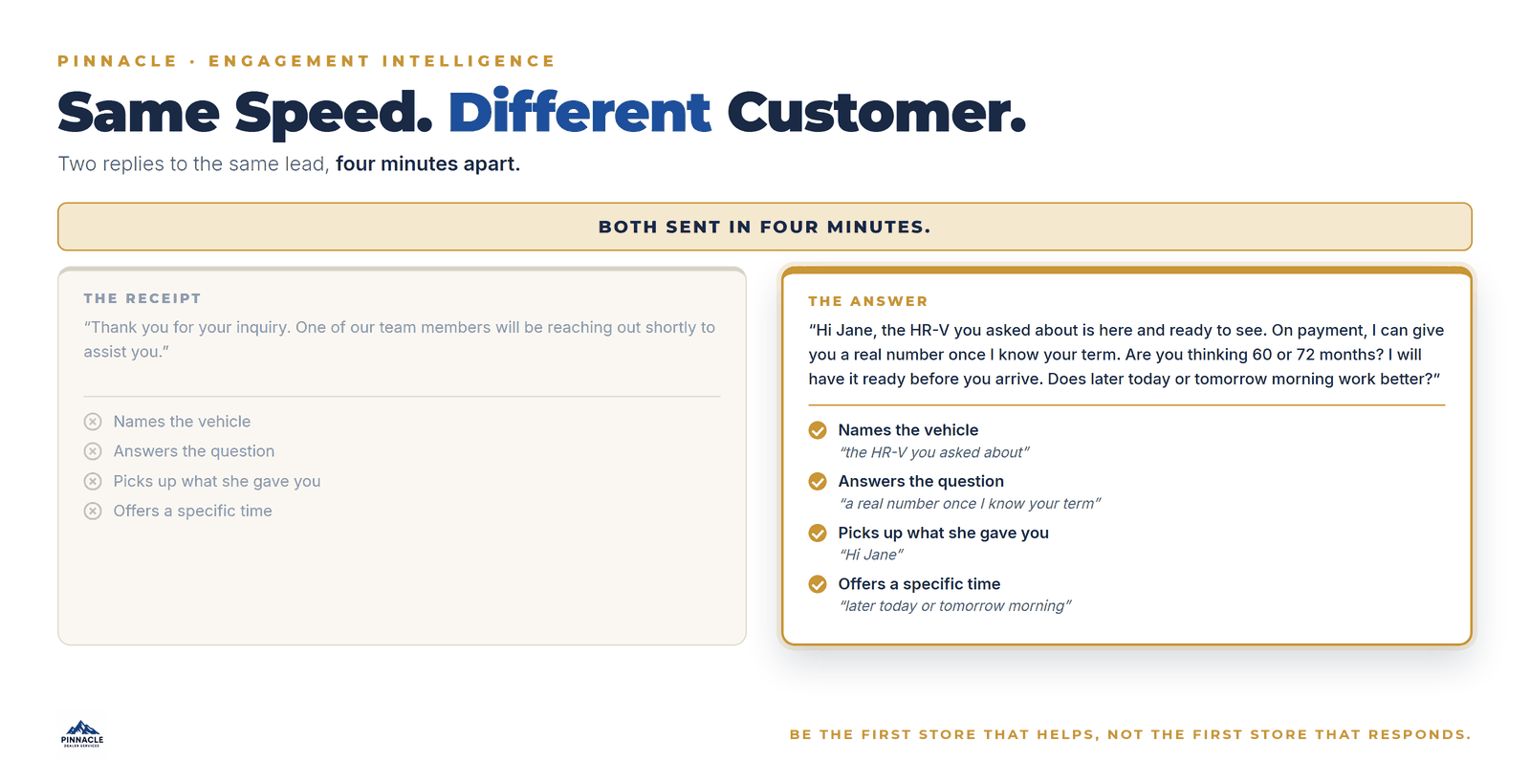
Most dealership follow-up fails because it sounds exactly like follow-up. Customers receive generic “just checking in” texts, robotic CRM emails, and voicemails that feel more like pressure than conversation. After a while, buyers stop responding not because they are uninterested, but because the communication feels impersonal and repetitive.
Strong automotive follow-up does not feel like chasing customers. It feels like continuing a conversation that already started naturally inside the showroom. The best dealership salespeople understand that follow-up works best when it feels personalized, emotionally relevant, and low-pressure.
This page expands on the communication principles discussed in our broader guide to car sales follow-up and focuses specifically on practical dealership follow-up scripts for real-world customer situations.
Why Most Dealership Follow-Up Scripts Don’t Work
Many dealerships still rely on rigid CRM templates that sound disconnected from the actual customer experience. The customer visits the showroom, has a unique conversation, explains their frustrations and priorities, then receives a generic message that could have been sent to anyone.
Customers see the same follow-up lines constantly:
“Just checking in.”
“Wanted to follow up.”
“Are you still in the market?”
“Can I answer any questions?”
The issue is not necessarily the wording itself. The issue is that these messages feel emotionally empty. They do not reference the customer’s situation, concerns, or goals.
Strong dealership follow-up reconnects with the original conversation.
Overly Aggressive Follow-Up Creates Resistance
Some salespeople treat follow-up like pressure escalation. Every text becomes more urgent, every voicemail becomes more desperate, and customers emotionally pull away.
The best follow-up conversations stay calm. Customers should feel helped, not hunted.
Most Follow-Up Fails Because Discovery Was Weak
Good follow-up starts before the customer even leaves the showroom. Salespeople who ask better discovery questions naturally gather details that make later communication feel more personalized.
This is one reason the dealership communication process discussed in our car sales conversation formula matters so much. Follow-up improves dramatically when the initial conversation was emotionally relevant.
What Great Automotive Follow-Up Actually Sounds Like
The strongest dealership follow-up feels natural enough that customers do not immediately categorize it as “sales follow-up.”
Good Follow-Up Feels Personal
Customers respond when communication reflects something real from the conversation:
family needs
commute frustrations
timing concerns
trade-in goals
vehicle preferences
That emotional continuity matters far more than perfectly polished wording.
The Best Follow-Up Sounds Calm and Helpful
Customers do not want to feel cornered after leaving the dealership. Strong follow-up sounds:
relaxed
conversational
helpful
emotionally aware
The goal is continuing trust, not forcing urgency.
Timing Matters, But Relevance Matters More
Dealerships obsess over speed, and speed absolutely matters during early lead handling. But once the showroom visit happens, relevance becomes even more important.
Our speed-to-lead discussions cover response timing in depth, but long-term engagement usually depends on personalization more than pure speed alone.
Car Sales Text Follow-Up Script Examples
Text messaging is one of the most effective dealership follow-up tools because it feels less formal and less pressured than phone calls or long emails. The problem is most dealership texts still sound automated.
Text Follow-Up After a Test Drive
Weak Generic Example
“Just checking in to see if you’re ready to move forward.”
This immediately sounds transactional.
Better Personalized Example
“Glad you had a chance to drive the SUV today. You mentioned wanting something more comfortable for longer family trips, so I wanted to see if any additional questions came up after you had time to think about it.”
This reconnects directly to the customer’s priorities instead of jumping immediately into pressure.
Why Personalized Follow-Up Gets Better Responses
Customers respond when they feel remembered. Referencing specific details from the showroom visit creates emotional continuity instead of sounding like mass outreach.
Unsold Showroom Traffic Text Script Example
One of the biggest missed opportunities in dealerships is unsold showroom traffic. Many customers leave intending to continue researching, but dealerships either follow up too aggressively or disappear entirely.
Better Unsold Traffic Example
“Appreciate you stopping by earlier today. I know you’re still narrowing things down, but if any questions come up while comparing options, feel free to reach out anytime.”
That keeps the relationship open without pressure.
Follow-Up Text for Customers Comparing Other Dealerships
Customers almost always compare multiple stores. Strong follow-up acknowledges reality instead of trying to fight it.
Better Example
“I know you’re looking at a few different options right now. If there’s anything you’d like clarified while comparing vehicles or dealerships, I’m happy to help make the process easier.”
This positions the salesperson as helpful instead of defensive.
Trade-In Follow-Up Text Example
Trade-in conversations often stay emotional after customers leave the showroom.
Better Example
“I know trade values are an important part of the overall decision. If you’d like, I can walk through the appraisal details further whenever you have time.”
That keeps transparency and trust intact.
Car Sales Email Follow-Up Examples
Email still plays an important role in dealership communication, especially for customers who prefer slower decision-making or more detailed information.
The mistake most dealerships make is sending overly corporate follow-up emails that feel copied directly from a CRM template.
Email Example After First Showroom Visit
Weak Generic Email Example
“Thank you for visiting our dealership today. Please contact us if you have any questions.”
Completely forgettable.
Better Conversational Follow-Up Email
“Thank you again for stopping by earlier today. I enjoyed learning more about what you’re looking for, especially your focus on finding something comfortable for longer commutes. I know vehicle decisions take time, so if additional questions come up while you continue narrowing things down, I’m always happy to help.”
That feels human.
Price Objection Follow-Up Email Example
Customers who leave because of pricing concerns often need emotional reassurance more than aggressive discounting.
Better Example
“I completely understand wanting to feel comfortable with the numbers before making a decision. Sometimes it helps to step back and revisit the bigger picture after having a little breathing room. If you’d like to revisit options or explore different structures later, I’m happy to help whenever the timing feels right.”
This keeps the conversation alive without sounding desperate.
Our guide on how many follow-up attempts convert leads goes deeper into long-term engagement timing and customer response behavior.
Email Follow-Up for Customers Who “Need More Time”
Customers often say they need more time because they feel emotionally overloaded.
Better Example
“No pressure at all. Most customers want time to think through a major purchase carefully. I simply wanted to thank you again for stopping by and let you know I’m available anytime if questions come up during your decision process.”
That lowers resistance while preserving trust.
Appointment Confirmation Email Example
Good appointment-setting communication reduces no-shows by creating emotional consistency before the visit.
Better Example
“Looking forward to seeing you tomorrow. I’ve already set aside time so we can focus specifically on the features and options you mentioned during our last conversation.”
That makes the appointment feel personalized instead of procedural.
Car Sales Voicemail Script Examples
Voicemail still matters because many customers screen calls but still listen to messages later.
The key is sounding relaxed and concise.
Voicemail Example After Missed Appointment
Weak Pushy Example
“You missed your appointment today. Please call me back immediately.”
That creates pressure instantly.
Better Low-Pressure Voicemail Example
“Hey John, just wanted to check in after we missed each other earlier today. No worries at all — I know schedules get busy. Whenever you’re ready to reconnect, I’d be happy to pick things back up where we left off.”
This protects the relationship instead of creating tension.
Voicemail for Unsold Showroom Traffic
Better Example
“Appreciate you taking the time to stop by this week. I know you’re still weighing options, but if anything comes up while you continue researching, feel free to reach out anytime.”
Simple. Calm. Low-pressure.
Voicemail Follow-Up After Price Objection
Better Example
“I know the financial side of the conversation was a major focus during your visit, so I just wanted to let you know I’m available anytime if you’d like to revisit different options or structures later.”
That keeps the conversation emotionally open.
Follow-Up Scripts for Unsold Showroom Traffic
Unsold traffic is one of the largest revenue leaks inside most dealerships.
Customers leave with interest but gradually emotionally disconnect because the follow-up lacks relevance or consistency.
Most Unsold Traffic Follow-Up Sounds Generic
Customers immediately recognize copy-and-paste CRM messaging. Once that happens, engagement drops dramatically.
Great Salespeople Continue the Original Conversation
The strongest follow-up references:
emotional concerns
family priorities
trade goals
ownership frustrations
vehicle preferences
This creates continuity instead of restarting the conversation from zero every time.
Timing Still Matters
Most dealerships either:
give up too quickly
or follow up too aggressively
Balanced, conversational persistence usually works best long-term.
The Psychology Behind Effective Dealership Follow-Up
Customers respond emotionally before they respond logically.
Customers Respond to Relevance More Than Persistence
More messages do not automatically create better results. Relevant messages do.
People Ignore Messages That Feel Mass-Produced
Customers want to feel like:
individuals
remembered buyers
real conversations matter
Not CRM pipeline entries.
Emotional Continuity Improves Response Rates
The best follow-up feels like a continuation of trust instead of a separate sales process.
Low-Pressure Messaging Builds More Trust
Pressure usually shortens conversations. Calm communication keeps them alive longer.
Biggest Car Sales Follow-Up Mistakes
The most common dealership follow-up mistake is making every message about closing immediately.
Customers usually need:
reassurance
clarity
emotional comfort
flexibility
consistency
before they need urgency.
Other major mistakes include:
following up too aggressively
using generic templates
discussing only pricing
failing to personalize messages
abandoning leads too early
How High-Performing Dealerships Train Follow-Up Communication
The strongest dealerships coach follow-up communication intentionally instead of leaving it entirely up to personality.
Managers should regularly review:
texts
emails
voicemails
CRM notes
appointment conversations
to improve consistency and emotional tone.
The best dealerships also role-play follow-up scenarios regularly so communication sounds natural instead of improvised under pressure.
Our sales BDC training focuses heavily on helping teams improve real-world customer communication across the entire dealership follow-up process.
Download the Car Sales Follow-Up Script Cheat Sheet
A dealership follow-up cheat sheet can help sales and BDC teams maintain more consistent communication across:
showroom follow-up
text messaging
voicemail
email outreach
appointment confirmations
unsold showroom traffic
Useful sections could include:
low-pressure text examples
voicemail wording
pricing objection follow-up
appointment recovery scripts
emotional re-engagement prompts
trade conversation follow-up examples
This type of resource is especially useful for onboarding, coaching sessions, CRM integration, and dealership communication consistency.
Video Examples of Dealership Follow-Up Conversations
This page is ideal for:
follow-up role-play videos
voicemail walkthroughs
“bad vs better” text examples
BDC coaching clips
unsold showroom traffic recovery examples
Video examples help dealership teams understand:
pacing
tone
emotional control
personalization
conversational timing
far more effectively than templates alone.
Frequently Asked Questions About Car Sales Follow-Up Scripts
What are the best car sales follow-up scripts?
The strongest follow-up scripts feel conversational, personalized, and emotionally relevant instead of overly aggressive or robotic.
How often should dealerships follow up with unsold customers?
Consistency matters, but follow-up should stay balanced and helpful instead of overwhelming or desperate.
What should dealership follow-up texts say?
Good follow-up texts reconnect with the original conversation, reference customer priorities, and maintain a calm, low-pressure tone.
What are the best voicemail scripts for car sales?
The best voicemail scripts sound short, relaxed, and conversational while leaving the customer emotionally comfortable reconnecting later.
Why does most dealership follow-up fail?
Most dealership follow-up fails because communication feels generic, repetitive, or disconnected from the actual showroom conversation.
How can BDC teams improve follow-up communication?
Strong BDC teams improve through role-playing, conversation reviews, personalization training, and emotionally intelligent communication coaching.
Most dealership sales conversations become price conversations far too early. A customer asks about a vehicle, the salesperson immediately starts discussing rebates, payments, APR options, and inventory discounts, and suddenly the entire interaction revolves around numbers before the customer feels emotionally connected to anything they are considering buying.
That is one of the biggest reasons customers shop dealerships like commodities. If no meaningful value is built during the conversation, price becomes the only thing left to compare.
Top-performing automotive salespeople understand that customers rarely buy vehicles based purely on logic. They buy based on comfort, confidence, lifestyle fit, emotional relief, convenience, excitement, family needs, or long-term ownership goals. The strongest dealership conversations build emotional ownership before price ever becomes the central topic.
This page expands on the ideas introduced in our car sales conversation formula and focuses specifically on how dealership salespeople create value naturally during customer conversations.
Why Most Dealership Sales Conversations Become Price-Focused Too Quickly
Most salespeople do not intentionally rush into pricing conversations. It usually happens because they are trying to prove value too early without fully understanding the customer first.
Salespeople Present Inventory Before Creating Emotional Connection
A customer mentions wanting an SUV, and the salesperson immediately starts presenting:
trim packages
incentives
monthly payment estimates
inventory availability
technical features
The problem is the customer still has no emotional attachment to the vehicle or ownership experience.
Without emotional connection, customers compare:
numbers
discounts
payment differences
dealership pricing
instead of comparing value.
Customers Compare Price When They Don’t Feel Ownership Value
If a customer emotionally feels:
safer
more comfortable
less stressed
more confident
more excited
about a vehicle, price conversations become easier later.
But if the salesperson never builds emotional ownership, customers naturally reduce the conversation down to:
“Who’s cheaper?”
“What’s my payment?”
“Can another dealership beat this?”
That is why value-building matters so much in modern dealership communication.
Product Information Is Not the Same as Emotional Value
Most customers do not emotionally care about technical features alone.
For example:
“This SUV has adaptive cruise control” is not emotionally meaningful yet.
But:
“You mentioned long highway commutes every week. Most customers say this feature reduces fatigue quite a bit during longer drives.”
Now the feature connects to the customer’s life.
That changes the conversation entirely.
Strong Value-Building Reduces Objections Later
When customers emotionally connect with ownership benefits early, objections become easier to manage later because the vehicle no longer feels interchangeable.
This directly impacts many of the pricing conversations discussed in our guide to car sales price objections.
What Building Value Actually Means in Automotive Sales
Building value does not mean manipulating customers or avoiding pricing discussions. It means helping buyers understand why a vehicle fits their life before discussing numbers.
Customers Buy Ownership Experience, Not Specifications
Most buyers are not walking into a dealership excited about engine compression ratios or suspension geometry. They are thinking about:
family comfort
reliability
stress reduction
image
convenience
safety
confidence
lifestyle upgrades
Top salespeople know how to connect features back to those emotional outcomes.
Emotional Buying Triggers Shape Most Vehicle Decisions
Customers often justify purchases logically later, but emotional triggers usually drive initial desire.
Examples include:
finally replacing an unreliable vehicle
wanting safer transportation for children
reducing daily commute frustration
feeling more successful professionally
enjoying road trips more comfortably
simplifying family logistics
Great dealership conversations uncover those emotional drivers naturally.
Customers Need to Picture Ownership Before They Buy
One of the strongest value-building techniques in automotive sales is helping customers mentally experience ownership before they make the decision.
Customers need to imagine:
driving the vehicle daily
parking it at home
using it with family
commuting comfortably
feeling confident inside it
That emotional visualization increases attachment long before price enters the conversation.
Our value-based car sales training focuses heavily on teaching dealership teams how to create these conversations naturally.
The Psychology Behind Value-Based Car Sales Conversations
The strongest dealership conversations are psychologically aware without sounding manipulative.
Comfort, Convenience, and Confidence Drive Decisions
Customers often say they want:
reliability
affordability
better fuel economy
But underneath those logical statements are emotional goals:
less stress
more confidence
greater comfort
fewer problems
improved daily routines
The salesperson’s job is understanding the emotional layer behind the practical request.
Customers Buy Emotionally Before They Buy Financially
Even financially responsible buyers usually make emotional decisions first.
That emotional response might be:
relief
excitement
safety
pride
comfort
confidence
The financial side matters tremendously, but emotional certainty often comes first.
Fear of Regret Impacts Automotive Purchases
Customers are often trying to avoid:
making the wrong decision
overpaying
buying unreliable vehicles
regretting the dealership experience
Strong value-building lowers those fears by increasing confidence and clarity.
How Top Dealership Salespeople Build Value Before Discussing Price
The best salespeople build value throughout the entire conversation instead of trying to “close” value at the end.
Using Discovery Questions to Uncover Emotional Buying Motivations
Strong value-building begins during discovery.
Questions like:
“What’s been frustrating about your current vehicle?”
“What made you start shopping now?”
“What would make your next vehicle feel like a real upgrade?”
help uncover emotional motivations naturally.
That information allows the salesperson to personalize the presentation later instead of using generic inventory pitches.
Connecting Features to Real-Life Customer Situations
This is where many dealership salespeople improve dramatically once trained correctly.
Weak presentation: “This trim has heated seats.”
Stronger presentation: “You mentioned early morning commutes during winter. Most customers really appreciate this feature because it makes cold mornings much more comfortable.”
The feature stays the same. The emotional connection changes.
Why Storytelling Builds More Value Than Specifications
Customers emotionally respond to stories much faster than technical explanations.
For example:
“A lot of customers who commute long distances say this feature completely changed how exhausting their drive feels.”
That creates relatability and ownership imagination.
Storytelling helps customers picture themselves benefiting from the vehicle instead of simply hearing specifications listed at them.
Helping Customers Mentally Experience Ownership
Great dealership conversations help buyers emotionally step into ownership before committing.
Examples:
discussing family road trips
daily commuting comfort
loading sports equipment
reducing stress during bad weather
simplifying routines
This creates emotional familiarity with the vehicle.
Feature vs Benefit Examples in Car Sales Conversations
One of the biggest mistakes in automotive sales is confusing features with value.
Weak Feature-Focused Example
“This truck has a tow package, upgraded suspension, and integrated trailer assist.”
Technically accurate, but emotionally flat.
Stronger Benefit-Focused Conversation Example
“You mentioned towing your boat several weekends each month. Most truck owners appreciate how much easier this setup makes longer towing trips, especially when backing into tighter areas.”
Now the customer sees:
convenience
confidence
reduced stress
practical ownership benefit
instead of technical jargon.
Lifestyle-Based Selling Example
A customer shopping for a family SUV may care less about horsepower and more about:
cargo flexibility
child comfort
travel convenience
stress reduction
A luxury buyer may care more about:
driving experience
comfort
image
confidence
A truck buyer may focus on:
utility
work capability
long-term durability
Strong salespeople adapt presentations to lifestyle priorities instead of presenting every vehicle the same way.
Several of these conversational approaches also align with our modern dealership sales scripts framework.
Mistakes Salespeople Make When Trying to Build Value
Many salespeople unintentionally weaken value-building without realizing it.
Talking Too Much About Features
Customers rarely emotionally connect with long technical explanations.
Discussing Price Before Emotional Connection Exists
Premature pricing usually shifts the entire conversation into comparison mode.
Using Generic Phrases Every Customer Hears
Statements like:
“This vehicle practically sells itself”
“You can’t beat this deal”
“This won’t last long”
often sound overly scripted and reduce trust.
Presenting Every Vehicle the Same Way
Different buyers care about different outcomes. Presentations should feel personalized.
Overloading Customers With Technical Information
Too much information too early creates confusion instead of excitement.
How Building Value Changes Price Conversations
Price resistance changes dramatically when emotional value already exists.
Customers Resist Price Less When They Feel Emotionally Connected
Customers who emotionally picture ownership are usually more willing to work through financial conversations than customers who still feel disconnected from the vehicle.
When customers feel confident about the overall ownership experience, trade discussions become less emotionally combative.
Emotional Confidence Reduces Hesitation
Most customers simply want confidence:
confidence in the dealership
confidence in the vehicle
confidence in the decision
Value-building creates that emotional stability.
Great Salespeople Slow Down Price Resistance
Instead of immediately defending pricing, experienced salespeople return the conversation back toward ownership benefits, customer priorities, and long-term satisfaction.
Role-Play Examples of Value-Based Car Sales Conversations
This is where value-building becomes practical instead of theoretical.
Example: Family SUV Conversation
Customer: “We really just need more room.”
Salesperson: “What’s become hardest with your current setup?”
Customer: “Honestly, road trips and sports equipment.”
Salesperson: “That makes sense. Most families in that situation appreciate how much easier daily routines become once they have flexible cargo space and easier access for kids.”
The conversation focuses on ownership experience, not specifications.
Example: Luxury Vehicle Buyer
Customer: “I’m looking for something a little nicer this time.”
Salesperson: “What’s pushing you toward upgrading now?”
Customer: “Honestly, I’m driving a lot more for work.”
Salesperson: “That makes sense. Most people who spend significant time driving daily want the experience itself to feel more comfortable and rewarding.”
That builds emotional value naturally.
Example: First-Time Buyer Nervous About Payments
Customer: “I just don’t want to overextend myself.”
Salesperson: “Completely understandable. Most buyers want confidence both financially and with the vehicle itself. Besides payment comfort, what matters most to you long-term?”
That keeps the conversation emotionally balanced instead of immediately defensive.
How Dealerships Train Salespeople to Build Value Naturally
Strong value-building is trainable when dealerships coach conversations correctly.
Role-Playing Helps Salespeople Improve Faster
The best dealerships regularly role-play:
emotional discovery
feature-to-benefit transitions
lifestyle conversations
ownership visualization
price transition timing
Coaching Conversations Works Better Than Memorized Scripts
The strongest dealership teams sound structured but natural.
Managers should coach:
listening
pacing
emotional awareness
personalization
confidence
instead of only script memorization.
Confidence Directly Impacts Value Communication
Salespeople who sound uncertain struggle to create emotional certainty for customers.
That is why conversational confidence matters so heavily in automotive sales performance. Our sales confidence training helps dealership teams improve natural communication without sounding robotic or overly aggressive.
The Best Dealerships Train Emotional Intelligence Alongside Product Knowledge
Product knowledge matters. But understanding customer psychology matters just as much.
Our sales consultant training helps dealership teams improve:
discovery conversations
emotional connection
objection prevention
value communication
customer trust-building
through practical, modern dealership coaching.
Download the Value-Based Car Sales Conversation Cheat Sheet
A dealership value-building cheat sheet can help sales teams improve consistency during:
vehicle presentations
discovery conversations
objection prevention
trade discussions
follow-up conversations
Useful sections could include:
feature-to-benefit examples
emotional trigger prompts
lifestyle discovery questions
transition language
ownership visualization examples
customer conversation templates
This type of resource is especially useful for:
onboarding
role-play sessions
coaching meetings
BDC transitions
showroom consistency
Video Examples of High-Value Automotive Sales Conversations
This page is ideal for:
embedded role-play videos
feature-to-benefit demonstrations
manager coaching examples
lifestyle selling walkthroughs
customer psychology breakdowns
Video examples help dealership teams understand:
tone
pacing
emotional connection
transition timing
conversational control
far more effectively than static scripts alone.
Frequently Asked Questions About Building Value in Car Sales
What does building value mean in automotive sales?
Building value means helping customers emotionally understand why a vehicle improves their lifestyle, comfort, confidence, or ownership experience before focusing heavily on pricing.
Why do customers focus so heavily on price?
Customers naturally focus on price when emotional ownership value has not been established yet.
What is the difference between features and benefits?
Features describe what a vehicle has. Benefits explain how those features improve the customer’s real-life experience.
Why is lifestyle selling important in car sales?
Lifestyle selling helps customers emotionally connect vehicle ownership to their routines, frustrations, goals, and priorities.
How do dealership salespeople create emotional connection?
Strong salespeople ask discovery questions, listen carefully, personalize presentations, and connect vehicle features back to the customer’s real-world needs.
How can dealerships train value-based selling skills?
Most dealership salespeople are taught objection handling like it is a verbal boxing match. The customer says something difficult, and the salesperson immediately fires back with a scripted response designed to “overcome” resistance as quickly as possible. The problem is customers can feel that happening almost instantly. The conversation becomes tense, defensive, and transactional.
Strong objection handling in automotive sales does not sound like rebuttal training. It sounds calm, conversational, and emotionally aware. The best sales consultants know how to slow conversations down, lower customer resistance, and guide buyers through uncertainty without sounding robotic or overly rehearsed.
This page expands on the principles discussed in our dealership car sales conversation formula and focuses specifically on real-world dealership objection handling examples that feel natural instead of scripted.
Why Most Dealership Objection Handling Fails
Most objections are not actually about the words customers use. They are about uncertainty, hesitation, emotional discomfort, lack of trust, or incomplete value-building earlier in the sales process.
Salespeople Try to Defeat Objections Instead of Understanding Them
Many dealership salespeople immediately shift into “save the deal” mode the moment resistance appears. Customers feel pressure instead of support, and the conversation becomes harder instead of easier.
Great salespeople do not treat objections like arguments to win. They treat objections like information to understand.
Scripted Responses Sound Forced
Customers hear the same recycled phrases constantly:
“What if I could…”
“If I could get you there today…”
“What’s really holding you back?”
Those lines often create more resistance because they sound transactional instead of conversational.
This is why our guide to objection handling that stops sounding like you’re selling focuses heavily on lowering pressure and increasing conversational control.
Most Objections Are Emotional, Not Logical
A customer saying:
“The price is too high”
“I need to think about it”
“I’m still shopping”
usually means something deeper is unresolved.
It could be:
uncertainty
trust concerns
fear of making the wrong decision
emotional discomfort
lack of urgency
missing value perception
Top-performing dealership salespeople understand the emotional side of objections instead of reacting only to the surface statement.
What Great Car Sales Objection Handling Actually Sounds Like
Strong dealership conversations feel controlled without feeling aggressive.
Great Salespeople Slow Conversations Down
The average salesperson speeds up when objections appear. They talk more, explain more, and pressure harder. Elite salespeople usually do the opposite. They slow the pace, ask better questions, and create space for the customer to explain what is really happening.
Questions Usually Work Better Than Defenses
Instead of defending the dealership immediately, experienced sales consultants often ask clarifying questions first.
That approach:
lowers tension
increases trust
uncovers the real issue
keeps the customer engaged
Tone Matters More Than Scripts
The same sentence can sound supportive or manipulative depending on tone, pacing, and delivery.
That is why confidence matters so much in automotive sales communication. Our sales confidence training focuses heavily on helping salespeople sound calm, natural, and conversational instead of overly rehearsed.
Car Sales Objection Handling Examples for Real Dealership Conversations
The examples below are designed to reflect real showroom conversations instead of generic sales theory.
“I Need to Think About It” Objection Handling Example
This is one of the most common dealership objections because it often hides uncertainty the customer does not fully want to explain yet.
The Wrong Way to Respond
“Totally understand. What exactly do you need to think about?”
Customers usually hear this as pressure.
A Better Dealership Conversation Example
Customer: “I think I just need to think about it.”
Salesperson: “That makes sense. Most people want to feel comfortable before making a big decision. Is there anything specific still feeling unclear or unresolved for you?”
Customer: “I’m just not sure if this is the right time.”
Salesperson: “Completely fair. Sometimes timing feels obvious, and sometimes people just need to sort through a few things first. What part feels most uncertain right now?”
That response lowers pressure and keeps the conversation open.
What the Customer Is Usually Actually Saying
“I need to think about it” often means:
“I still feel unsure.”
“I don’t fully trust this yet.”
“I’m overwhelmed.”
“I’m nervous about making a mistake.”
“I need emotional space.”
When salespeople understand that, their responses become calmer and more effective.
“Your Price Is Too High” Objection Handling Example
Price objections are rarely only about numbers. Most of the time they reflect incomplete value-building earlier in the conversation.
Why Defending Price Too Quickly Backfires
The average salesperson immediately starts justifying pricing:
market conditions
rebates
inventory shortages
dealership costs
Customers usually stop listening because emotionally they still feel disconnected from the value.
Better Price Objection Conversation Example
Customer: “Honestly, the price feels too high.”
Salesperson: “I understand. A lot of customers feel that way initially when comparing options. Besides the numbers themselves, what part feels hardest to justify right now?”
Customer: “I’m just trying to stay comfortable monthly.”
Salesperson: “That makes sense. Most buyers are balancing both the vehicle they want and the financial comfort they need. Let’s look at the structure together and see where flexibility may exist.”
The conversation stays collaborative instead of defensive.
Our full breakdown of dealership car sales price objections goes deeper into how value-building changes pricing conversations entirely.
“I’m Shopping Other Dealerships” Conversation Example
Customers comparison shop constantly. The mistake many salespeople make is becoming defensive or attacking competitors.
Why Customers Say This
Usually customers are trying to:
protect themselves from pressure
gather confidence
compare experiences
avoid buyer’s remorse
It is rarely a personal attack on the dealership.
Bad Response vs Better Response
Weak Response
“Well, our dealership has better service than everyone else.”
Better Response
Salesperson: “That makes total sense. Most customers compare a few places before making a decision. What’s been most important to you as you’ve visited different dealerships?”
Customer: “Honestly, just transparency.”
Salesperson: “I completely understand that. The process matters just as much as the vehicle for most buyers.”
That response keeps the conversation grounded and human.
“I Want More for My Trade” Objection Handling Example
Trade-in objections often become emotional because customers attach personal value to their vehicle history and ownership experience.
The Mistake of Arguing About Market Value
When salespeople immediately argue:
auction values
market averages
dealership margins
customers often feel dismissed.
Better Trade-In Conversation Example
Customer: “I think my trade is worth more than that.”
Salesperson: “I understand. Most people naturally compare the value to what they’ve invested into the vehicle over time. What number were you expecting to be closer to?”
Customer: “Probably a few thousand more.”
Salesperson: “Got it. Let’s walk through how the numbers were calculated so you can see exactly where things landed.”
This keeps transparency and collaboration intact.
“I’m Not Buying Today” Objection Handling Example
This objection usually becomes difficult only when salespeople try forcing urgency too aggressively.
Why Pressure Creates More Resistance
Customers want control over the pace of the decision. High-pressure responses usually create emotional withdrawal instead of urgency.
Better Conversation Example
Customer: “I’m not buying today.”
Salesperson: “No problem at all. My goal today is mainly helping you get clarity so whenever you are ready, you feel confident moving forward.”
Customer: “Yeah, I’m still early in the process.”
Salesperson: “Totally understandable. What would help make the process feel more comfortable as you continue looking?”
That keeps the relationship open instead of creating tension.
It also protects future follow-up opportunities, which is critical for long-term dealership engagement and car sales follow-up success.
The Psychology Behind Car Sales Objections
The best objection handling usually sounds less like persuasion and more like emotional understanding.
Most Objections Come From Uncertainty
Customers are trying to avoid:
regret
embarrassment
financial stress
feeling manipulated
making the wrong decision
That emotional layer matters far more than memorized rebuttals.
Customers Resist Feeling Controlled
The faster salespeople push, the harder customers emotionally pull away.
People want guidance, not pressure.
Listening Often Closes More Deals Than Talking
Many salespeople interrupt objections because silence feels uncomfortable. But customers often reveal the real concern if given enough conversational space.
Listening is usually more powerful than countering.
How Dealership Salespeople Can Practice Objection Handling
Objection handling improves through repetition, coaching, and realistic role-play training.
Role-Playing Matters
The strongest dealership teams regularly practice:
showroom conversations
trade objections
pricing discussions
follow-up resistance
appointment hesitation
That repetition builds conversational confidence.
Recording Conversations Improves Coaching
Top-performing dealerships review:
phone calls
CRM notes
showroom interactions
follow-up conversations
to identify patterns and coaching opportunities.
Great Managers Coach Tone, Not Just Scripts
Managers often focus too heavily on exact wording. In reality:
pacing
empathy
confidence
emotional awareness
matter far more than perfect memorization.
Our sales consultant training focuses heavily on helping dealership teams improve real conversational performance instead of relying on rigid scripts alone.
The Biggest Objection Handling Mistakes Salespeople Make
Talking Too Much
Overexplaining usually increases resistance.
Interrupting the Customer
Customers often reveal the true objection if allowed to finish speaking.
Sounding Defensive About Price
Defensiveness weakens trust.
Using “Closing Lines” Too Early
Customers recognize pressure quickly.
Treating Every Customer the Same
Different personalities require different conversational pacing and approaches.
Download the Car Sales Objection Handling Cheat Sheet
A dealership objection handling cheat sheet can help sales teams improve consistency during:
showroom conversations
follow-up calls
appointment confirmations
trade discussions
pricing conversations
Useful sections could include:
natural transition phrases
confidence-building responses
trade objection examples
follow-up conversation prompts
emotional discovery questions
appointment-saving language
This type of downloadable resource also works well for onboarding and dealership role-play training sessions.
Video Role-Play Examples for Dealership Sales Teams
This page is ideal for:
embedded objection handling videos
manager coaching examples
side-by-side role-play comparisons
conversational breakdowns
Video walkthroughs help dealership teams understand:
pacing
tone
emotional control
listening techniques
transition language
much more effectively than script sheets alone.
Frequently Asked Questions About Car Sales Objection Handling
What is objection handling in car sales?
Objection handling is the process of responding to customer concerns, hesitation, or resistance during the dealership sales process in a way that keeps the conversation productive and trust-focused.
What are the most common dealership sales objections?
Some of the most common objections include:
“The price is too high”
“I need to think about it”
“I’m shopping other dealerships”
“I’m not buying today”
“I want more for my trade”
How do top car salespeople handle price objections?
Strong salespeople focus on understanding the customer’s concerns, rebuilding value, and keeping conversations collaborative instead of defensive.
Why do customers say they need to think about it?
Usually because some form of uncertainty still exists, including timing concerns, emotional hesitation, financial stress, or lack of confidence in the decision.
Should dealership salespeople use scripts?
Scripts can provide structure, but conversations should still sound natural, flexible, and emotionally aware.
How can dealerships train salespeople to handle objections better?
Most dealership salespeople lose the customer long before pricing ever becomes the issue. The conversation breaks down during discovery. Customers feel rushed into inventory presentations, pressured into payment conversations too early, or treated like another CRM entry instead of a real buyer with specific frustrations, priorities, and motivations.
Strong automotive sales conversations start with understanding why the customer walked into the dealership in the first place. The best sales consultants are not simply asking surface-level qualifying questions. They are uncovering lifestyle needs, emotional buying triggers, ownership frustrations, timeline urgency, and decision-making dynamics before they ever start discussing numbers. That is what separates a transactional salesperson from someone who consistently builds trust, creates stronger appointments, and closes more deals.
This page expands on the principles covered in our internal guide to the dealership car sales conversation formula and focuses specifically on the discovery phase that top-performing dealerships train relentlessly.
Why Most Car Sales Conversations Fail During the Discovery Phase
Many salespeople think discovery is simply gathering enough information to match a customer with a vehicle. In reality, the discovery phase determines almost everything that happens later in the conversation, including objection handling, trade-in discussions, follow-up effectiveness, and appointment commitment.
Salespeople Talk About Vehicles Before Understanding the Buyer
One of the most common dealership mistakes is jumping into product presentation mode too quickly. A customer mentions wanting an SUV, and suddenly the salesperson is discussing inventory availability, trim levels, rebates, and monthly payments before understanding anything meaningful about the customer’s actual life.
That creates shallow conversations. Customers start comparing vehicles strictly on price because the salesperson never built personal value around ownership, convenience, comfort, reliability, or lifestyle fit.
Weak Discovery Creates More Price Objections Later
Most pricing objections are not really pricing objections. They are value failures. When customers feel emotionally disconnected from the vehicle or unconvinced that the salesperson truly understands their needs, price becomes the only comparison tool left.
This is why better discovery conversations naturally reduce many of the objections discussed in our guide to car sales price objections. Strong needs analysis builds context before pricing enters the conversation.
Product Pushing Feels Different Than Guided Discovery
Customers can immediately feel the difference between:
a salesperson trying to move inventory
and a salesperson trying to understand the buyer
The second approach slows the conversation down initially, but usually speeds up trust-building, lowers resistance, and creates a more productive showroom experience overall.
What Is Proper Car Sales Needs Analysis?
Needs analysis is not an interrogation. It is a structured but conversational process that helps dealership salespeople understand how the customer actually lives, shops, drives, and makes decisions.
The goal is not to collect data for a CRM field. The goal is to understand motivation.
Lifestyle Questions Reveal More Than Vehicle Preferences
A customer saying they “want something reliable” does not tell you much. But learning that they commute 90 minutes daily, drive two children to school every morning, and recently had a breakdown on the interstate completely changes the emotional context of the conversation.
That is where better automotive sales questions matter.
The strongest dealership discovery conversations focus on:
routines
frustrations
convenience
family usage
ownership goals
emotional triggers
before discussing specific inventory.
Emotional Discovery Changes the Entire Conversation
Customers rarely buy vehicles based on logic alone. They justify purchases logically, but emotional factors drive urgency and attachment.
Sometimes the motivation is:
safety
reliability
confidence
image
convenience
reduced stress
family comfort
career growth
Top-performing salespeople know how to uncover those motivations naturally without sounding scripted.
The Four Things Great Salespeople Are Actually Trying to Learn
The best dealership discovery process is usually trying to uncover four core areas:
What problem is the customer trying to solve?
What emotional outcome are they looking for?
How quickly do they realistically want to buy?
What obstacles could slow the decision later?
Those answers shape the entire sales process.
The Best Car Sales Needs Analysis Questions for First Conversations
The strongest qualifying questions feel conversational, not rehearsed. Customers should feel like they are talking with someone genuinely trying to help them narrow down the right decision, not someone reading from a checklist.
Lifestyle and Daily Driving Questions
These questions help uncover practical usage patterns and emotional frustrations.
Examples:
“What does your normal week of driving look like?”
“Who usually rides with you most often?”
“What’s frustrating you most about your current vehicle?”
“What made you decide now was the right time to start shopping?”
“What’s one thing you wish your current vehicle did better?”
These questions help salespeople understand:
commute demands
passenger needs
comfort priorities
reliability concerns
emotional dissatisfaction
Instead of immediately discussing horsepower or trim packages, the conversation becomes centered around the customer’s actual experience.
Questions That Reveal Emotional Buying Motivations
Most customers do not walk into a dealership announcing emotional motivations directly. The salesperson has to uncover them through conversation.
Examples:
“What would make your next vehicle feel like a real upgrade?”
“What matters most to you this time around?”
“When you picture owning your next vehicle, what are you hoping improves?”
“What’s been missing from your current ownership experience?”
This is where value-building starts happening naturally.
Our value-based car sales training focuses heavily on helping dealership teams connect features back to lifestyle and emotional ownership benefits instead of simply presenting inventory specifications.
Qualifying Questions That Don’t Feel Interrogational
Customers expect some level of qualifying conversation. The problem happens when it starts feeling transactional or overly aggressive too early.
Good qualifying sounds natural.
Examples:
“Have you started looking at trade values yet?”
“Are there any vehicles you’ve already ruled out?”
“Who else will be helping make the final decision?”
“How quickly are you hoping to make a move if you find the right fit?”
“Have you already driven anything you liked?”
The goal is not pressure. The goal is clarity.
Questions That Help Prevent Future Objections
Experienced salespeople know many objections can be identified early if the conversation is structured properly.
Examples:
“What concerns do you usually have when shopping for a vehicle?”
“What was frustrating about your last dealership experience?”
“Are you comparing multiple dealerships right now?”
“What usually slows people down when making this kind of decision?”
Questions like these help surface resistance before it becomes a closing problem.
How Top Dealership Salespeople Transition From Questions Into Vehicle Presentation
The transition from discovery into presentation is where many salespeople lose momentum. They gather good information, then suddenly switch into a generic product pitch that ignores everything the customer just shared.
Repeat Priorities Back to the Customer
One of the simplest but most effective techniques is summarizing the customer’s priorities before presenting inventory.
For example:
“So based on what you shared, reliability, rear-seat space, and reducing your commute stress are the biggest priorities, correct?”
That simple step makes customers feel heard.
Great Walkarounds Feel Personalized
The best vehicle presentations connect directly back to earlier discovery questions.
Instead of: “This trim comes with lane assist.”
It becomes: “You mentioned driving long highway commutes every week. This feature tends to reduce fatigue quite a bit during longer drives.”
That feels entirely different psychologically.
This also connects closely with the principles discussed in our guide to car sales first impressions.
Real Car Sales Needs Analysis Role-Play Examples
This is where dealership sales training becomes practical instead of theoretical.
Example: Family SUV Shopper
Salesperson: “What pushed you to start looking at SUVs right now?”
Customer: “Honestly, we just outgrew our current car.”
Salesperson: “What’s become the biggest frustration day-to-day?”
Customer: “Space. Especially on weekends when the kids have sports.”
Salesperson: “So comfort and room are probably more important than flashy upgrades?”
Customer: “Exactly.”
At this point, the salesperson now understands:
lifestyle usage
emotional frustration
ownership priorities
practical buying triggers
The presentation becomes dramatically easier.
Example: Payment-Focused Buyer
Customer: “I’m mostly worried about staying within budget.”
Salesperson: “Completely understandable. Besides payment comfort, what matters most in your next vehicle?”
That question prevents the conversation from becoming exclusively payment-driven too early.
Example: Customer Shopping Multiple Dealerships
Salesperson: “Have you visited many stores yet?”
Customer: “A few.”
Salesperson: “What’s been your experience so far?”
This opens the door for customers to discuss frustrations, confusion, or trust issues that the salesperson can address naturally.
Several of the conversational structures discussed here also align with our dealership modern dealership sales scripts and car dealer scripts guide resources.
Mistakes Dealership Salespeople Make During Needs Analysis
Even experienced salespeople can accidentally damage the conversation during discovery.
Turning the Conversation Into an Interview
Rapid-fire questioning creates tension. Customers should feel guided, not processed.
The best discovery conversations feel fluid and collaborative.
Talking About Inventory Too Early
Many salespeople rush toward inventory because it feels productive. But customers who do not feel understood usually remain emotionally detached from the process.
Discussing Price Before Building Value
Price conversations become much easier after emotional value has already been established.
Without discovery, price becomes the only meaningful differentiator.
Using Robotic Word Tracks
Customers can immediately hear when a salesperson is reciting memorized lines without genuine engagement.
That is why strong dealership coaching matters. Confidence and listening skills matter more than perfect script memorization. Our sales confidence training focuses heavily on helping salespeople sound natural while maintaining conversational structure.
How Better Discovery Questions Improve Car Sales Follow-Up
Most dealership follow-up fails because the original conversation lacked meaningful discovery.
Generic follow-up sounds generic because the salesperson never learned enough about the customer to personalize communication later.
Good Notes Create Better Follow-Up
Strong needs analysis gives salespeople valuable CRM notes that improve:
text follow-up
phone calls
email personalization
appointment reminders
Personal Details Improve Engagement
Customers respond differently when the salesperson remembers:
commute concerns
family priorities
vehicle frustrations
ownership goals
That is what makes follow-up feel human instead of automated.
Our guide to car sales follow-up expands further on how discovery improves long-term engagement and appointment conversion.
How Dealerships Train Sales Teams to Improve Needs Analysis Conversations
High-performing dealerships do not leave discovery conversations to chance. They train them consistently.
Role-Playing Discovery Scenarios
The best dealerships regularly role-play:
first greetings
qualifying conversations
emotional discovery
objection prevention
transition language
That is how conversations become smoother and more natural over time.
Coaching Matters More Than Script Sheets
Most dealerships already have scripts. The real issue is execution.
Managers need to coach:
listening
pacing
emotional awareness
conversational confidence
transition control
Discovery Skills Directly Impact Closing Rates
When salespeople understand customers better, everything downstream improves:
rapport
presentation quality
objection handling
appointment commitment
closing consistency
Our sales consultant training helps dealerships build more structured, modern sales conversations that feel natural while improving accountability and performance.
Download the Car Sales Needs Analysis Cheat Sheet
Dealership teams should consider building a standardized discovery framework that sales consultants can use consistently during showroom conversations.
A strong cheat sheet can include:
qualifying questions
emotional discovery prompts
trade-in conversation starters
objection prevention questions
follow-up note templates
customer priority summaries
This becomes especially useful for:
new hires
onboarding
role-play sessions
dealership sales coaching
BDC-to-sales transitions
Frequently Asked Questions About Car Sales Needs Analysis
What are needs analysis questions in car sales?
Needs analysis questions help dealership salespeople understand a customer’s priorities, frustrations, lifestyle, timeline, and emotional buying motivations before presenting inventory or discussing pricing.
Why is discovery important in dealership sales?
The discovery phase shapes the entire customer experience. Better discovery improves trust, reduces objections, strengthens presentations, and creates more effective follow-up conversations.
How many questions should a salesperson ask before presenting a vehicle?
There is no exact number. The goal is understanding the customer well enough to personalize the presentation instead of giving a generic walkaround.
What are the best qualifying questions for automotive sales?
The best questions uncover:
lifestyle needs
ownership frustrations
urgency
decision-making dynamics
emotional priorities
without making the customer feel interrogated.
How does needs analysis reduce price objections?
When customers feel emotionally connected to the vehicle and understood by the salesperson, conversations become less price-focused and more value-focused.
One of the first questions dealerships ask before launching a campaign is simple: how much does automotive direct mail actually cost? The answer depends on far more than printing postcards or purchasing a mailing list. Dealership direct mail pricing is influenced by targeting strategy, campaign type, mailing volume, creative development, operational support, and the overall campaign structure behind the mail itself.
At Pinnacle Sales and Mail, we help dealerships build automotive direct mail campaigns designed around measurable dealership performance, not generic mass-mail marketing. Our campaigns are structured around customer targeting, appointment generation, inventory goals, retention strategy, and dealership operations.
Automotive direct mail pricing varies significantly based on campaign goals, audience targeting, dealership size, and operational complexity. Two campaigns with similar mailing volume may have completely different pricing structures depending on how the campaign is built and supported.
Mailing Volume
Campaign size is one of the biggest pricing variables. A small independent dealership mailing a few thousand households will have a different cost structure than a multi-rooftop dealer group running large-scale regional campaigns.
Mailing volume affects:
printing costs
postage rates
data processing
campaign logistics
creative customization
list segmentation
Some dealerships run one-time campaigns, while others maintain ongoing monthly retention and appointment-generation campaigns.
Audience Targeting & Data Quality
Highly targeted dealership campaigns generally perform better than broad untargeted mailers, but more advanced targeting often increases campaign complexity.
The quality of the customer data and targeting strategy often has a direct impact on overall campaign performance.
Mail Format & Creative
The format of the mail piece itself also affects pricing. Some dealerships use simple postcard campaigns, while others use more personalized or multi-piece campaign structures.
More customized creative and personalization usually increases production costs but may improve response quality depending on campaign goals.
Campaign Complexity
A basic one-time campaign will typically have a different pricing structure than a dealership-wide retention or sales-event strategy involving multiple operational components.
Campaign complexity may involve:
multi-touch mail sequences
inventory-specific campaigns
appointment-generation systems
BDC coordination
campaign tracking
event support
CRM integration
reporting systems
The more operational support built into the campaign, the more sophisticated the campaign structure becomes.
BDC & Operational Support
Many dealerships underestimate how much campaign performance depends on follow-up execution after the mail is delivered. Automotive direct mail campaigns are often closely tied to:
BDC appointment handling
CRM follow-up
inbound call management
trade appraisal scheduling
sales process alignment
service lane coordination
Campaigns supported by operational systems and trained appointment processes typically perform more effectively than campaigns relying on the mail piece alone.
Average Dealership Direct Mail Campaign Costs
Automotive direct mail campaign pricing can vary widely depending on dealership size, targeting depth, and campaign goals. Instead of offering unrealistic “one-size-fits-all” pricing, dealerships should evaluate campaigns based on operational scope and expected performance outcomes.
Recurring campaigns often create stronger long-term customer engagement and retention opportunities than one-time promotional mailers alone.
What’s Included in Automotive Direct Mail Pricing?
Dealership direct mail campaigns involve more than printing and postage. Depending on campaign structure, pricing may include:
audience targeting
CRM segmentation
campaign strategy
creative development
copywriting
list acquisition
print production
postage
campaign tracking
BDC coordination
reporting systems
appointment strategy
operational support
At Pinnacle Sales and Mail, our automotive direct mail services are designed around dealership operations and measurable campaign performance rather than generic marketing templates.
Why Cheap Direct Mail Campaigns Often Underperform
Many dealerships have experienced disappointing direct mail results after working with low-cost vendors focused primarily on volume rather than operational performance. Cheap campaigns often fail because the dealership is purchasing mail production instead of a complete dealership marketing strategy.
A campaign may generate traffic initially, but without proper targeting and dealership follow-up systems, response quality and long-term ROI often decline quickly.
Strong automotive direct mail campaigns rely on:
customer segmentation
operational execution
inventory alignment
appointment generation
campaign timing
dealership process consistency
How Dealerships Measure Direct Mail ROI
Automotive direct mail campaigns should be measured using dealership operational metrics rather than broad vanity metrics alone.
Dealerships commonly track:
inbound calls
appointments scheduled
showroom visits
sold units
repair orders
trade appraisals
inventory acquisition
customer retention
appointment show rates
campaign profitability
At Pinnacle Sales and Mail, we help dealerships evaluate campaign performance using measurable dealership KPIs tied directly to operational outcomes.
Automotive Direct Mail Campaign Types & Pricing Factors
Conquest Mail Campaigns
Conquest campaigns target customers driving competing brands or servicing with competing dealerships. These campaigns often involve more advanced targeting and audience segmentation.
Equity Mining Campaigns
Equity mining campaigns focus on identifying customers who may qualify for upgrade, trade-in, or payment restructuring opportunities based on ownership and market positioning.
Service campaigns focus on customer retention, maintenance reminders, inactive customer reactivation, and service lane traffic generation.
Sales Event Campaigns
Dealership sales-event campaigns often involve larger mailing volumes, event coordination, appointment-generation systems, and showroom traffic management.
How Direct Mail Fits Into Dealership Marketing Budgets
Many dealerships now combine direct mail with digital advertising, CRM automation, BDC outreach, and customer lifecycle marketing. Instead of replacing digital marketing, direct mail often works best as part of a broader dealership marketing strategy.
Dealerships continue investing in direct mail because it supports:
For many dealerships, retention-focused campaigns generate stronger long-term profitability than relying entirely on cold digital lead acquisition.
Why Dealerships Use Pinnacle for Direct Mail Campaigns
Automotive direct mail campaigns require more than print production and mailing logistics. Successful campaigns depend on dealership operations, targeting strategy, appointment handling, inventory alignment, and measurable campaign execution.
At Pinnacle Sales and Mail, we help dealerships build direct mail campaigns designed around:
dealership retention
customer targeting
appointment generation
BDC coordination
inventory strategy
sales-event support
campaign reporting
operational dealership performance
Our campaigns are built specifically for automotive retail environments and dealership operational realities.
Frequently Asked Questions About Automotive Direct Mail Pricing
How much do dealership direct mail campaigns cost?
Pricing depends on mailing volume, targeting complexity, campaign structure, creative customization, and operational support requirements.
What affects automotive direct mail pricing?
Factors may include audience targeting, print format, personalization, campaign size, CRM segmentation, BDC support, and campaign complexity.
Are direct mail campaigns worth it for dealerships?
Many dealerships continue using direct mail because it supports customer retention, inventory acquisition, appointment generation, and measurable operational performance.
Do dealerships still use direct mail marketing?
Yes. Automotive direct mail remains widely used for service retention, conquest campaigns, lease pull-ahead campaigns, equity mining, and sales-event marketing.
How much does a dealership mailer cost per household?
Per-household pricing varies depending on targeting depth, mail format, campaign structure, and overall mailing volume.
What is included in direct mail campaign pricing?
Campaign pricing may include targeting, creative development, list acquisition, print production, postage, campaign tracking, and operational support.
Are conquest campaigns more expensive?
Conquest campaigns may involve more advanced targeting and audience segmentation, which can increase campaign complexity and pricing.
How do dealerships track direct mail ROI?
Dealerships commonly track appointments, sold units, trade appraisals, customer retention, showroom traffic, and campaign profitability.
Review Your Dealership Direct Mail Strategy
If your dealership is evaluating automotive direct mail pricing, dealership mail campaigns, or customer retention strategy, our team can help review your current campaign structure and identify opportunities to improve targeting, operational performance, and overall ROI.