Most dealership follow-up fails because it sounds exactly like follow-up. Customers receive generic “just checking in” texts, robotic CRM emails, and voicemails that feel more like pressure than conversation. After a while, buyers stop responding not because they are uninterested, but because the communication feels impersonal and repetitive. There is a fuller treatment of this in The Dealership Call Framework Every Rep Should Know.
Get In TouchStrong automotive follow-up does not feel like chasing customers. It feels like continuing a conversation that already started naturally inside the showroom. The best dealership salespeople understand that follow-up works best when it feels personalized, emotionally relevant, and low-pressure.
This page expands on the communication principles discussed in our broader guide to car sales follow-up and focuses specifically on practical dealership follow-up scripts for real-world customer situations.
Why Most Dealership Follow-Up Scripts Don’t Work
Many dealerships still rely on rigid CRM templates that sound disconnected from the actual customer experience. The customer visits the showroom, has a unique conversation, explains their frustrations and priorities, then receives a generic message that could have been sent to anyone. Dealer Overflow – Signs of US Inventory Pileup walks through this step by step.
That disconnect immediately weakens trust.
Customers Ignore Generic “Just Checking In” Messages
Customers see the same follow-up lines constantly:
- “Just checking in.”
- “Wanted to follow up.”
- “Are you still in the market?”
- “Can I answer any questions?”
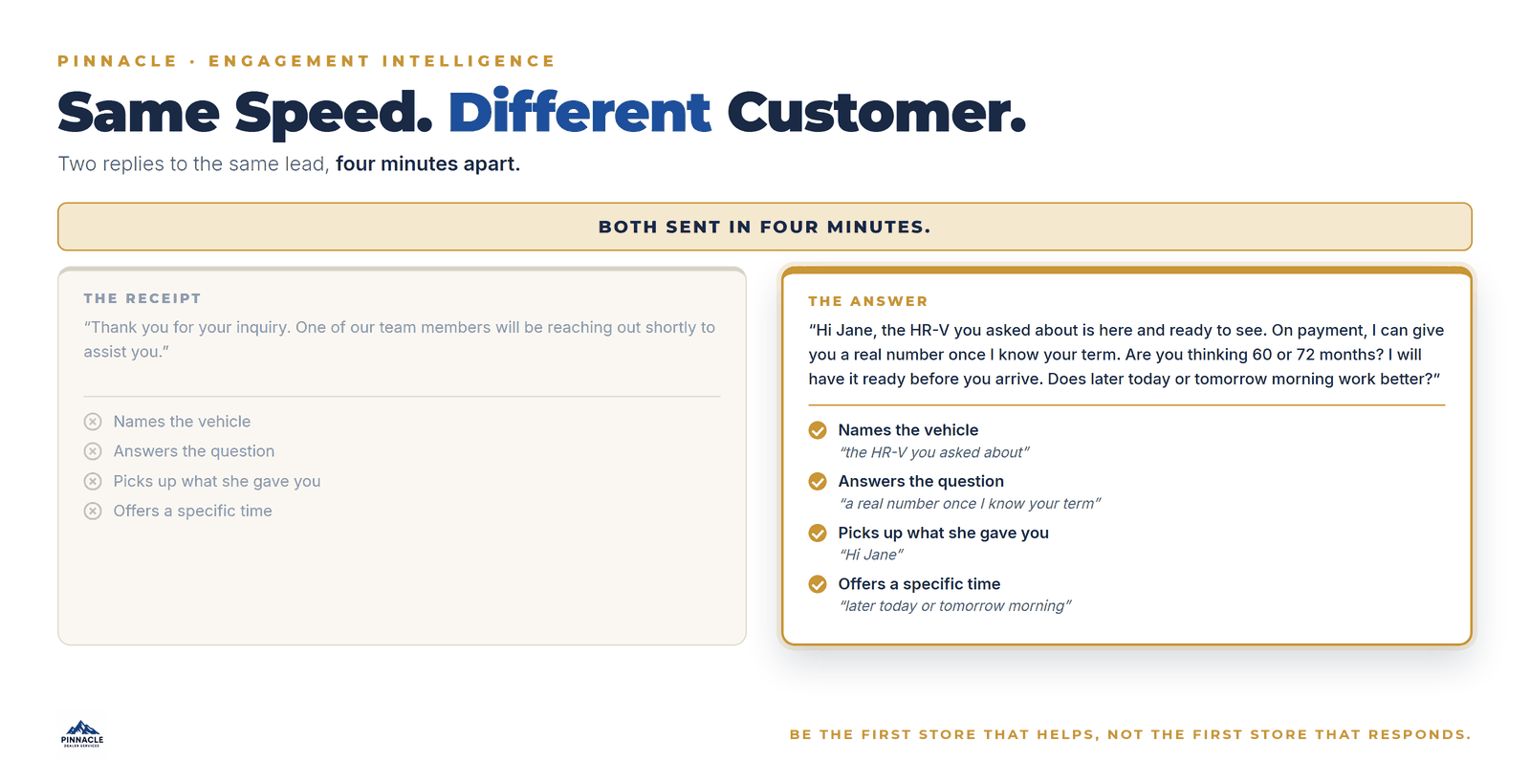
The issue is not necessarily the wording itself. The issue is that these messages feel emotionally empty. They do not reference the customer’s situation, concerns, or goals.
Strong dealership follow-up reconnects with the original conversation.
Overly Aggressive Follow-Up Creates Resistance
Some salespeople treat follow-up like pressure escalation. Every text becomes more urgent, every voicemail becomes more desperate, and customers emotionally pull away.
The best follow-up conversations stay calm. Customers should feel helped, not hunted.
Most Follow-Up Fails Because Discovery Was Weak
Good follow-up starts before the customer even leaves the showroom. Salespeople who ask better discovery questions naturally gather details that make later communication feel more personalized.
This is one reason the dealership communication process discussed in our car sales conversation formula matters so much. Follow-up improves dramatically when the initial conversation was emotionally relevant.
What Great Automotive Follow-Up Actually Sounds Like
The strongest dealership follow-up feels natural enough that customers do not immediately categorize it as “sales follow-up.”
Good Follow-Up Feels Personal
Customers respond when communication reflects something real from the conversation:
- family needs
- commute frustrations
- timing concerns
- trade-in goals
- vehicle preferences
That emotional continuity matters far more than perfectly polished wording.
The Best Follow-Up Sounds Calm and Helpful
Customers do not want to feel cornered after leaving the dealership. Strong follow-up sounds:
- relaxed
- conversational
- helpful
- emotionally aware
The goal is continuing trust, not forcing urgency.
Timing Matters, But Relevance Matters More
Dealerships obsess over speed, and speed absolutely matters during early lead handling. But once the showroom visit happens, relevance becomes even more important.
Our speed-to-lead discussions cover response timing in depth, but long-term engagement usually depends on personalization more than pure speed alone.
Car Sales Text Follow-Up Script Examples
Text messaging is one of the most effective dealership follow-up tools because it feels less formal and less pressured than phone calls or long emails. The problem is most dealership texts still sound automated.
Text Follow-Up After a Test Drive
Weak Generic Example
“Just checking in to see if you’re ready to move forward.”
This immediately sounds transactional.
Better Personalized Example
“Glad you had a chance to drive the SUV today. You mentioned wanting something more comfortable for longer family trips, so I wanted to see if any additional questions came up after you had time to think about it.”
This reconnects directly to the customer’s priorities instead of jumping immediately into pressure.
Why Personalized Follow-Up Gets Better Responses
Customers respond when they feel remembered. Referencing specific details from the showroom visit creates emotional continuity instead of sounding like mass outreach.
Unsold Showroom Traffic Text Script Example
One of the biggest missed opportunities in dealerships is unsold showroom traffic. Many customers leave intending to continue researching, but dealerships either follow up too aggressively or disappear entirely.
Better Unsold Traffic Example
“Appreciate you stopping by earlier today. I know you’re still narrowing things down, but if any questions come up while comparing options, feel free to reach out anytime.”
That keeps the relationship open without pressure.
Follow-Up Text for Customers Comparing Other Dealerships
Customers almost always compare multiple stores. Strong follow-up acknowledges reality instead of trying to fight it.
Better Example
“I know you’re looking at a few different options right now. If there’s anything you’d like clarified while comparing vehicles or dealerships, I’m happy to help make the process easier.”
This positions the salesperson as helpful instead of defensive.
Trade-In Follow-Up Text Example
Trade-in conversations often stay emotional after customers leave the showroom.
Better Example
“I know trade values are an important part of the overall decision. If you’d like, I can walk through the appraisal details further whenever you have time.”
That keeps transparency and trust intact.
Car Sales Email Follow-Up Examples
Email still plays an important role in dealership communication, especially for customers who prefer slower decision-making or more detailed information.
The mistake most dealerships make is sending overly corporate follow-up emails that feel copied directly from a CRM template.
Email Example After First Showroom Visit
Weak Generic Email Example
“Thank you for visiting our dealership today. Please contact us if you have any questions.”
Completely forgettable.
Better Conversational Follow-Up Email
“Thank you again for stopping by earlier today. I enjoyed learning more about what you’re looking for, especially your focus on finding something comfortable for longer commutes. I know vehicle decisions take time, so if additional questions come up while you continue narrowing things down, I’m always happy to help.”
That feels human.
Price Objection Follow-Up Email Example
Customers who leave because of pricing concerns often need emotional reassurance more than aggressive discounting.
Better Example
“I completely understand wanting to feel comfortable with the numbers before making a decision. Sometimes it helps to step back and revisit the bigger picture after having a little breathing room. If you’d like to revisit options or explore different structures later, I’m happy to help whenever the timing feels right.”
This keeps the conversation alive without sounding desperate.
Our guide on how many follow-up attempts convert leads goes deeper into long-term engagement timing and customer response behavior.
Email Follow-Up for Customers Who “Need More Time”
Customers often say they need more time because they feel emotionally overloaded.
Better Example
“No pressure at all. Most customers want time to think through a major purchase carefully. I simply wanted to thank you again for stopping by and let you know I’m available anytime if questions come up during your decision process.”
That lowers resistance while preserving trust.
Appointment Confirmation Email Example
Good appointment-setting communication reduces no-shows by creating emotional consistency before the visit.
Better Example
“Looking forward to seeing you tomorrow. I’ve already set aside time so we can focus specifically on the features and options you mentioned during our last conversation.”
That makes the appointment feel personalized instead of procedural.
Car Sales Voicemail Script Examples
Voicemail still matters because many customers screen calls but still listen to messages later.
The key is sounding relaxed and concise.
Voicemail Example After Missed Appointment
Weak Pushy Example
“You missed your appointment today. Please call me back immediately.”
That creates pressure instantly.
Better Low-Pressure Voicemail Example
“Hey John, just wanted to check in after we missed each other earlier today. No worries at all, I know schedules get busy. Whenever you’re ready to reconnect, I’d be happy to pick things back up where we left off.”
This protects the relationship instead of creating tension.
Voicemail for Unsold Showroom Traffic
Better Example
“Appreciate you taking the time to stop by this week. I know you’re still weighing options, but if anything comes up while you continue researching, feel free to reach out anytime.”
Simple. Calm. Low-pressure.
Voicemail Follow-Up After Price Objection
Better Example
“I know the financial side of the conversation was a major focus during your visit, so I just wanted to let you know I’m available anytime if you’d like to revisit different options or structures later.”
That keeps the conversation emotionally open.
Follow-Up Scripts for Unsold Showroom Traffic
Unsold traffic is one of the largest revenue leaks inside most dealerships.
Customers leave with interest but gradually emotionally disconnect because the follow-up lacks relevance or consistency.
Most Unsold Traffic Follow-Up Sounds Generic
Customers immediately recognize copy-and-paste CRM messaging. Once that happens, engagement drops dramatically.
Great Salespeople Continue the Original Conversation
The strongest follow-up references:
- emotional concerns
- family priorities
- trade goals
- ownership frustrations
- vehicle preferences
This creates continuity instead of restarting the conversation from zero every time.
Timing Still Matters
Most dealerships either:
- give up too quickly
- or follow up too aggressively
Balanced, conversational persistence usually works best long-term.
The Psychology Behind Effective Dealership Follow-Up
Customers respond emotionally before they respond logically.
Customers Respond to Relevance More Than Persistence
More messages do not automatically create better results. Relevant messages do.
People Ignore Messages That Feel Mass-Produced
Customers want to feel like:
- individuals
- remembered buyers
- real conversations matter
Not CRM pipeline entries.
Emotional Continuity Improves Response Rates
The best follow-up feels like a continuation of trust instead of a separate sales process.
Low-Pressure Messaging Builds More Trust
Pressure usually shortens conversations. Calm communication keeps them alive longer.
Biggest Car Sales Follow-Up Mistakes
The most common dealership follow-up mistake is making every message about closing immediately.
Customers usually need:
- reassurance
- clarity
- emotional comfort
- flexibility
- consistency
before they need urgency.
Other major mistakes include:
- following up too aggressively
- using generic templates
- discussing only pricing
- failing to personalize messages
- abandoning leads too early
How High-Performing Dealerships Train Follow-Up Communication
The strongest dealerships coach follow-up communication intentionally instead of leaving it entirely up to personality.
Managers should regularly review:
- texts
- emails
- voicemails
- CRM notes
- appointment conversations
to improve consistency and emotional tone.
The best dealerships also role-play follow-up scenarios regularly so communication sounds natural instead of improvised under pressure.
Our sales BDC training focuses heavily on helping teams improve real-world customer communication across the entire dealership follow-up process.
Download the Car Sales Follow-Up Script Cheat Sheet
A dealership follow-up cheat sheet can help sales and BDC teams maintain more consistent communication across:
- showroom follow-up
- text messaging
- voicemail
- email outreach
- appointment confirmations
- unsold showroom traffic
Useful sections could include:
- low-pressure text examples
- voicemail wording
- pricing objection follow-up
- appointment recovery scripts
- emotional re-engagement prompts
- trade conversation follow-up examples
This type of resource is especially useful for onboarding, coaching sessions, CRM integration, and dealership communication consistency.
Video Examples of Dealership Follow-Up Conversations
This page is ideal for:
- follow-up role-play videos
- voicemail walkthroughs
- “bad vs better” text examples
- BDC coaching clips
- unsold showroom traffic recovery examples
Video examples help dealership teams understand:
- pacing
- tone
- emotional control
- personalization
- conversational timing
far more effectively than templates alone.
Frequently Asked Questions About Car Sales Follow-Up Scripts
What are the best car sales follow-up scripts?
The strongest follow-up scripts feel conversational, personalized, and emotionally relevant instead of overly aggressive or robotic.
How often should dealerships follow up with unsold customers?
Consistency matters, but follow-up should stay balanced and helpful instead of overwhelming or desperate.
What should dealership follow-up texts say?
Good follow-up texts reconnect with the original conversation, reference customer priorities, and maintain a calm, low-pressure tone.
What are the best voicemail scripts for car sales?
The best voicemail scripts sound short, relaxed, and conversational while leaving the customer emotionally comfortable reconnecting later.
Why does most dealership follow-up fail?
Most dealership follow-up fails because communication feels generic, repetitive, or disconnected from the actual showroom conversation.
How can BDC teams improve follow-up communication?
Strong BDC teams improve through role-playing, conversation reviews, personalization training, and emotionally intelligent communication coaching.