
The best lead follow-up tactics for dealerships are answering every lead within minutes, replying with the answer the customer asked for, running a set multi-channel cadence, texting only with consent, sending short personal videos, confirming appointments twice, covering nights and weekends, and logging every touch in the CRM so managers can see what happened.
How We Chose
These are the follow-up habits we see make the biggest difference when we train BDC and sales teams and when our own call center works dealer leads. We ranked them by how much they change appointments and shows for the effort involved, putting the free, everyday fixes first. Where we cite a statistic, we link the source. None of these tactics needs a particular CRM or vendor.
At a Glance: The Shortlist
| Tactic | Best for | Effort | Channel |
|---|---|---|---|
| 1. Respond within minutes | Every internet lead | Low once staffed | Phone, text, email |
| 2. Answer the question asked | Price and availability leads | Low | Any |
| 3. A written multi-channel cadence | Leads that go quiet | Medium | Phone, text, email |
| 4. Text with consent | Customers who will not answer calls | Low | Text |
| 5. Short personal video | Remote and out-of-town shoppers | Medium | Text, email |
| 6. Confirm appointments twice | Raising show rate | Low | Phone, text |
| 7. Cover nights and weekends | After-hours leads and calls | Medium to high | Phone, text |
| 8. Same-day unsold showroom follow-up | Be-backs | Low | Phone, text |
| 9. Warm handoffs | BDC to sales transfers | Low | Phone, in person |
| 10. Log every touch in the CRM | Manager accountability | Low | CRM |
| 11. Long-term nurture and reactivation | Old and lost leads | Medium | All |
1. Respond to Every Lead Within Minutes
The first contact attempt is still the one that matters most. A Harvard Business Review study of 1.25 million sales leads found that firms which tried to contact a prospect within an hour of the inquiry were nearly seven times as likely to qualify the lead as those that waited even an hour longer, and more than 60 times as likely as those that waited 24 hours or more. The study was cross-industry and dates from 2011.
Best for: every internet lead, marketplace lead and chat.
What it involves: route leads to a named person with a phone, not a shared inbox, and set a target (for example, five minutes during open hours) that a manager checks daily.
Worth knowing: an automated email reply does not count as first contact; the clock stops when a person reaches out.
2. Answer the Question the Customer Asked
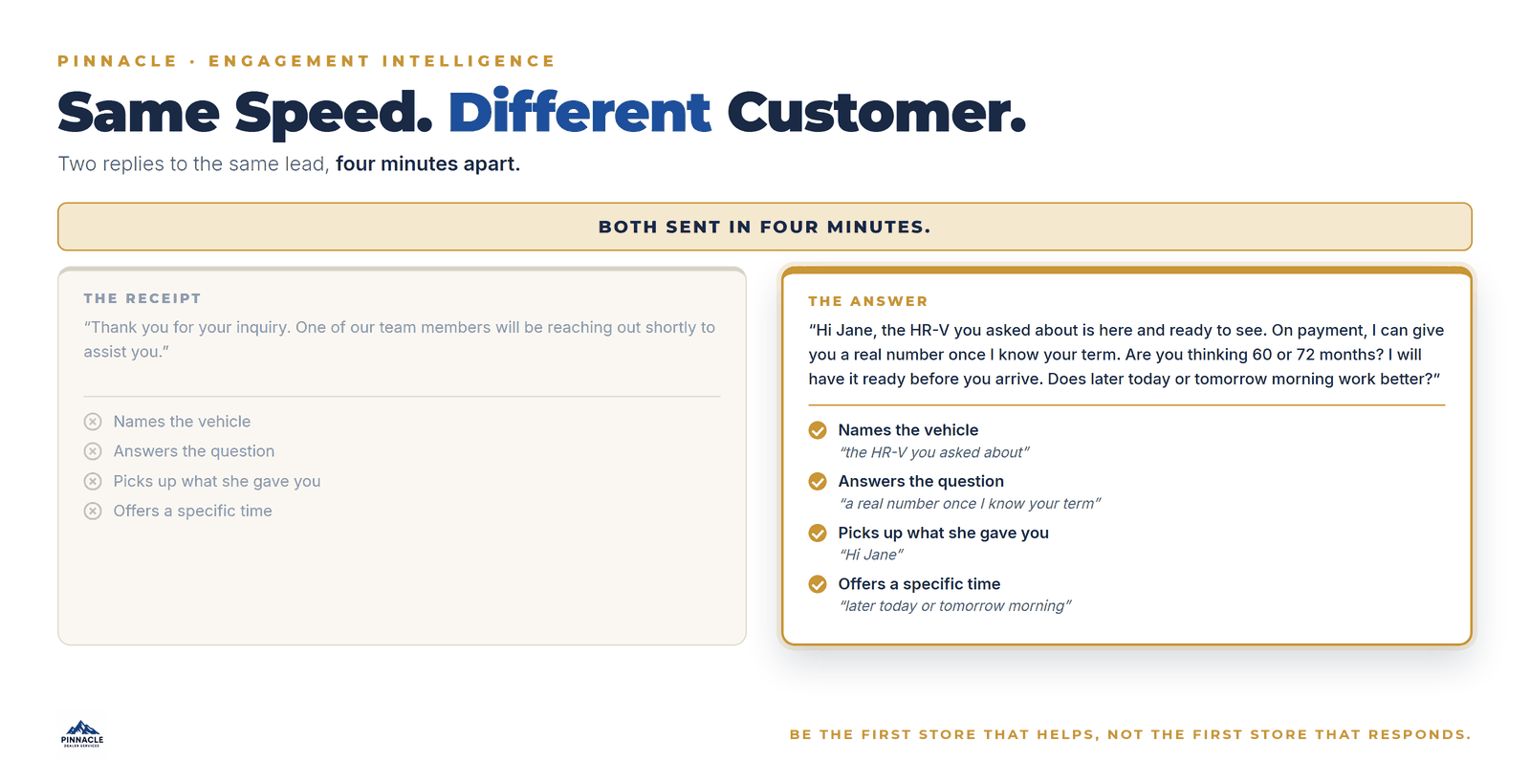
Fast replies that ignore the question ("When can you come in?") train customers to stop answering. If the lead asked about price, give a price or a clear range and explain what is included. If they asked whether the car is still there, confirm it and say where it is on the lot. Then ask for the appointment.
Best for: price, availability and trade-value leads.
What it involves: short templates for the five most common lead questions that reps personalize, not paste. Our car sales follow-up scripts give word tracks for text, email and voicemail.
Worth knowing: check your pricing language against your advertising rules before it goes into templates.
3. Run a Written Multi-Channel Cadence
Many leads are lost after day three, when follow-up fades. A written cadence says exactly which touch happens when: call and text on day one, a call and email on day two, a video on day three, then spaced touches through the first month.
Best for: leads that respond once and then go quiet.
What it involves: a cadence built as CRM tasks so nothing depends on memory. For how many attempts are worth making, see the science of follow-up.
Worth knowing: vary the message each time; ten copies of "just checking in" is not a cadence.
4. Text, but Only With Consent
Many customers will read a text long before they return a call. Texting works best for quick answers, photos, appointment details and confirmations. It is also the channel with the most legal exposure.
TCPA caution (not legal advice): marketing texts can require the customer's documented prior consent under the Telephone Consumer Protection Act and state laws, and customers can revoke consent by any reasonable means, such as replying "STOP," under FCC rules that took effect in April 2025 (summary from Bryan Cave Leighton Paisner). Courts have also been reshaping the consent rules (Holland & Knight, March 2026), so check your current practice with counsel. Our compliance resources collect our articles on this.
Best for: customers who asked to be texted or who submitted a lead form with a clear consent statement.
What it involves: consent capture on every form, a record of it in the CRM, and a working opt-out that stops all texts from every rep.
Worth knowing: replies to a customer who texted you first may be treated differently from bulk marketing texts; get advice on both.
5. Send a Short Personal Video
A 30 to 60 second video of the actual car, with the salesperson saying the customer's name, answers questions a photo cannot (the true color, the tire tread, the cargo space) and puts a face to the store.
Best for: out-of-town shoppers and anyone comparing two or three specific vehicles.
What it involves: a phone, a quiet spot on the lot and a two-line script: who you are, what they asked about, what you are showing them, and the next step.
Worth knowing: keep it short and send it where the customer already talks to you.
6. Confirm Every Appointment Twice
An appointment that does not show is a lead you have to win again. Confirm the day before and again two to three hours before, name the person who will meet them and the car that will be ready, and give them an easy way to move the time instead of skipping it.
Best for: any store whose show rate is below where it wants it.
What it involves: confirmation tasks created automatically when the appointment is set.
Worth knowing: a confirmation should add value (the car is pulled up, the numbers are ready), not just ask "are you still coming?"
7. Cover Nights and Weekends
Leads and calls keep coming after the showroom closes. Cover the gap with an evening shift, a rotation, an outside call center, or an AI first response that hands off to a person early the next day.
Best for: stores with heavy evening and Sunday lead flow.
What it involves: a look at when your leads actually arrive by hour, then coverage for the busiest gaps. Our comparison of outsourced BDC companies covers options for handing this off.
Worth knowing: whoever covers after hours must be able to book an appointment, not just take a message.
8. Follow Up Unsold Showroom Traffic the Same Day
A customer who came in and left without buying is the warmest lead you have. A thank-you text within the hour and a call from the salesperson or manager that evening, with one new piece of information (a different payment, a trade number, another unit), brings more of them back than a generic survey.
Best for: be-backs and customers who left over numbers.
What it involves: a rule that every unsold customer gets a manager touch before the end of the day.
Worth knowing: log why they left, so tomorrow's follow-up addresses it.
9. Make Warm Handoffs, Not Cold Transfers
When a BDC agent sets an appointment or transfers a call, the salesperson should already know the customer's name, the car and what was promised. Introduce the salesperson by name before the transfer and send them the notes. Customers who have to repeat themselves lose trust fast.
Best for: stores with a BDC or receptionist between the customer and the salesperson.
What it involves: a short handoff note template in the CRM and a rule that the salesperson reaches out before the appointment.
Worth knowing: the handoff is where many appointments are lost, even when the BDC did its job well.
10. Log Every Touch in the CRM
Follow-up that is not in the CRM did not happen as far as a manager can tell. Every call, text, email and video should be logged with a short, useful note: what the customer said, what was promised and the next step.
Best for: managers who need to coach and hold people accountable.
What it involves: a daily five-minute review of leads with no contact, overdue tasks and appointments not yet confirmed.
Worth knowing: if reps must work outside the CRM to text, fix the tool or the integration; side channels hide follow-up.
11. Keep a Long-Term Nurture and Reactivation Plan
Many shoppers are not ready this week, and many "dead" leads bought nothing at all. A monthly touch for leads that went quiet, plus a structured reactivation campaign every quarter, turns old records into appointments without buying new leads.
Best for: stores with thousands of old leads sitting in the CRM.
What it involves: segmented campaigns (by vehicle interest, age of lead and reason lost) worked by phone, text where consent exists, and email. We lay out one approach in our article on outbound systems that reactivate dead leads.
Worth knowing: consent and do-not-call rules apply to old leads too; scrub lists before calling or texting.
How to Put These Tactics to Work
Do not roll out all twelve at once. Start with the three that cost nothing: a response-time target, a written cadence and a daily CRM review. Measure for 30 days (response time, contact rate, appointments set, shows), then add confirmations, video and after-hours coverage.
Assign an owner to each tactic; follow-up usually fails because no one checks that it happened. If your team needs help building the process and the habits, our lead management service works with your people inside your CRM.
Frequently Asked Questions
How fast should a dealership respond to an internet lead?
As fast as a person can make meaningful contact, ideally within minutes during open hours. A Harvard Business Review study found firms that tried to reach a lead within an hour were nearly seven times as likely to qualify it as firms that waited longer. Set a target, measure it daily and cover after hours.
How many times should a salesperson follow up with a lead?
More than most do. Many stores stop after two or three attempts in the first days. A written cadence that mixes calls, texts, email and video over the first month, followed by monthly nurture, keeps you in front of shoppers who buy later. Vary the message so each touch gives a new reason to reply.
Can dealerships text customers who submit a lead?
Often yes, but consent rules apply. Capture clear consent on your forms, record it in the CRM, honor opt-outs by any reasonable means and keep marketing texts separate from replies to customer questions. TCPA rules have been changing in the courts, so review your practice with counsel. This is not legal advice.
What is the best way to raise appointment show rates?
Confirm twice (the day before and a few hours before), name the person meeting the customer, have the car ready, and make it easy to reschedule instead of skipping. A warm handoff from the BDC to the salesperson, with notes, also helps because the customer feels expected when they arrive.
Summary
Good follow-up is mostly discipline: respond within minutes, answer the question asked, stick to a written cadence, text only with consent, confirm appointments twice and log everything so managers can see it. None of it needs a big budget, but all of it needs an owner. If you want trained people running it with you, see our sales BDC training or Get In Touch.