The best lead sources for car dealerships are the ones you already own: your website and phone calls, your service drive and your CRM database. After those come third-party marketplaces such as Cars.com, Autotrader and CarGurus, search, OEM leads, referrals, direct mail, sales events and social media. Rank them by cost per sale, not lead count.
How We Chose
We ranked lead source types, not vendors, using four questions: how ready to buy the customer usually is, what the lead costs, whether the customer relationship ends up belonging to you, and how easy the source is to scale up or down. Where we cite shopper data we link it; most of it comes from Cox Automotive's 2025 Car Buyer Journey study, published in January 2026.
A note on our angle: Pinnacle sells direct mail, sales events and BDC services, and we do not sell websites, SEO or paid ad management. We have kept mail and events in the middle of this list rather than at the top.
At a Glance: The Shortlist
| Lead source | Who owns the customer | Typical cost | Typical buying intent |
|---|---|---|---|
| 1. Your website (forms, chat, calls) | You | Website and traffic costs | High |
| 2. Inbound phone calls | You | Comes with your marketing | Very high |
| 3. Service drive | You | Low | Medium, rises with equity |
| 4. CRM database and equity mining | You | Low | Medium |
| 5. Third-party marketplaces | Shared with the site | Subscription or per lead | High, heavily cross-shopped |
| 6. Search (organic and paid) | You, once they convert | Medium to high | High |
| 7. OEM and manufacturer leads | Shared with the OEM | Program fees vary | Medium to high |
| 8. Referrals and repeat buyers | You | Low | High |
| 9. Direct mail | You, once they respond | Per piece | Medium |
| 10. Sales events | You | Event fees | High during the event |
| 11. Social media | Varies by platform | Low to medium | Low to medium |
1. Your Own Website
Vehicle detail page forms, chat, trade tools and click-to-call on your own site produce leads from shoppers who have already narrowed down to your store and often to a specific car. In Cox Automotive's study, 59% of buyers used dealership websites while shopping. The lead and all its data land in your CRM with no one else in between.
Best for: every store; this is the base every other source feeds.
What it takes: forms that ask only for what you need, fast load on phones, accurate prices and inventory, and a person answering within minutes.
Worth knowing: website leads are usually few relative to traffic, so test your own forms and chat weekly to make sure they reach a person.
2. Inbound Phone Calls
A customer who picks up the phone is ready to talk now, which makes calls the highest-intent lead most stores get. Calls come from every other source on this list: the website, marketplaces, mail, search and the service drive.
Best for: any store that can answer reliably, including after hours.
What it takes: call tracking by source, a measured answer rate, and someone able to set an appointment on every call.
Worth knowing: a missed call is a lost lead with no form to follow up on, so overflow and after-hours coverage matter as much as ad spend.
3. The Service Drive
Your service customers already trust the store, and many are sitting in the waiting room with a car that is aging, out of warranty or worth more than they think. Turning service visits into sales conversations is one of the cheapest sources of sales appointments.
Best for: franchise stores with a busy service lane.
What it takes: a daily list of customers in for service with equity or high mileage, and a low-pressure appraisal offer. Our guide to turning service drive traffic into sales appointments lays out the process.
Worth knowing: advisors and the BDC need a shared script so the customer never feels sold to while waiting for an oil change.
4. Your CRM Database and Equity Mining
Past buyers, old leads and lease customers are already in your CRM. Equity mining looks for customers whose payoff is below their trade value, or whose lease or loan is near its end, and gives them a reason to talk about a new vehicle at a similar payment.
Best for: stores with several years of sales history in the CRM.
What it takes: data pulled from the DMS and CRM, then outreach by phone, email, mail and text where consent exists. See how it works with mail in our article on equity mining mail campaigns.
Worth knowing: data quality decides results; old addresses and numbers waste money, so clean the list first.
5. Third-Party Marketplaces (Cars.com, Autotrader, CarGurus)
Marketplaces are where most shoppers compare cars: 75% of buyers used third-party websites in Cox Automotive's study, more than any other type of site. The best-known listing sites for dealers include Cars.com, part of Cars Commerce (which also owns Dealer Inspire and AccuTrade); Autotrader, a Cox Automotive brand; and CarGurus, a Boston-based public company.
Best for: used-car inventory and stores that need reach beyond their own website traffic.
What it takes: accurate photos and prices, a listing plan matched to your inventory, and tracking of calls, leads and sold units by site.
Worth knowing: marketplace shoppers compare several dealers at once, so price and response speed carry more weight than on your own site; compare cost per sale across sites every quarter.
6. Search (Organic and Paid)
41% of buyers used search engines while shopping in the Cox study. Search sends shoppers to your website or listings when they look for a model, a service or your store by name, so it is often how the first source on this list gets its traffic.
Best for: stores competing on specific models or in larger metro markets.
What it takes: a website that ranks for your brands and city, and paid search campaigns managed against sold units, not clicks.
Worth knowing: we do not sell SEO or paid search, so treat this as a buyer's view: ask any agency to report cost per sold car.
7. OEM and Manufacturer Leads
Automakers pass leads from their own sites to franchised dealers. These shoppers are often early in the process and researching a new model, and 33% of new-vehicle buyers used automaker websites in the Cox study (25% of all buyers).
Best for: franchise stores selling new vehicles.
What it takes: fast response and a clear answer on availability and pricing, since the customer may have built a car online.
Worth knowing: ask your OEM representative whether your response time on these leads is tracked, and hold them to the same speed standard as your own.
8. Referrals and Repeat Buyers
A customer sent by a friend, or a past buyer coming back, arrives with trust already built. These leads rarely show up in lead reports because they walk in or call a salesperson directly.
Best for: stores with strong customer satisfaction and long-tenured salespeople.
What it takes: a simple referral thank-you, a way to record the source in the CRM, and regular contact with past buyers.
Worth knowing: check local and state rules and your OEM guidelines before offering cash or gifts for referrals.
9. Direct Mail
Mail reaches households that are not searching yet: conquest buyers, owners with equity, lease-end customers and people near your store who do not follow you online. It works best when it is targeted and tied to a specific offer or date. Compare providers in our list of the best automotive direct mail companies.
Best for: conquest, equity and lease-end campaigns, and event invitations.
What it takes: a clean, targeted list, a clear offer, a tracked phone number or URL, and a BDC ready for the response.
Worth knowing: measure mail by sold units matched to the mailing list, not by calls alone.
10. Sales Events
A sales event concentrates mail, digital and phone outreach into a few days and brings in a burst of appointments and walk-ins. Events work well to move inventory or to restart a slow month. See our list of the best automotive sales event companies for providers.
Best for: stores that need a lot of traffic in a short window.
What it takes: a targeted invitation list, enough staff to handle the traffic, and follow-up on every unsold guest afterward.
Worth knowing: an event borrows from its follow-up; the unsold guests are a lead source of their own for weeks after.
11. Social Media
26% of buyers used social media while shopping in the Cox study. Social platforms are strong for staying visible and for targeted inventory or event ads, but lead quality varies widely.
Best for: building awareness and promoting events or specific inventory.
What it takes: real photos and video from your store, a quick reply to messages, and ads with a clear next step.
Worth knowing: social leads often need more follow-up before they are ready to set an appointment.
How to Choose Your Lead Mix
Start by measuring what you already have. For each source, track leads, appointments, shows and sold units for 90 days, and divide what you spent by cars sold. Our guide to marketing attribution for a dealership explains how to match sales back to sources.
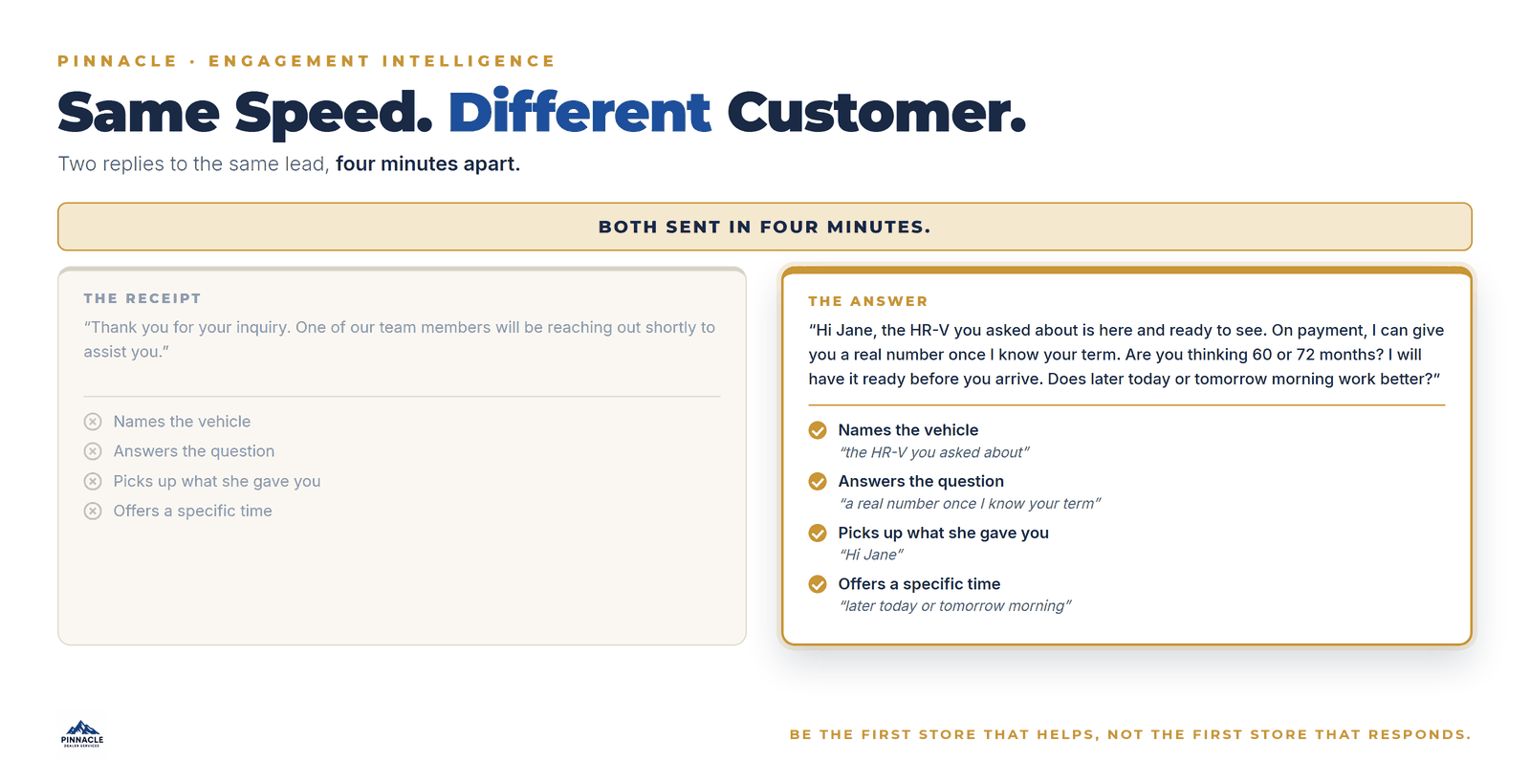
Then fix follow-up before you buy more leads. A store that answers slowly will get poor results from every source, and adding volume only hides the leak.
Frequently Asked Questions
What is the best lead source for a car dealership?
For most stores, the sources you already own: your website, inbound calls, the service drive and your CRM database. They cost the least, the customer data is yours, and the shoppers already know you. Paid sources such as marketplaces and mail add reach on top of that base.
Are third-party marketplace leads worth it?
They can be, because most shoppers use them: 75% of buyers in Cox Automotive's 2025 Car Buyer Journey study used third-party websites. Those shoppers compare several stores at once, so fast response and competitive pricing matter. Track cost per sold car by site and review it every quarter.
How should a dealership measure lead source performance?
Track each source from lead to appointment, show and sale, then divide spend by cars sold. Use call tracking and tracked URLs so phone and walk-in traffic is credited to the right source. Lead count alone rewards cheap, low-intent sources.
Should dealerships buy more leads or work existing ones harder?
Usually work existing ones first. Old leads, unsold showroom traffic, service customers and equity positions in your CRM cost little to contact. If response time and follow-up are weak, buying more leads adds cost without adding many sales.
Summary
The strongest lead sources are the ones you own: your website, your phones, your service drive and your database, backed by marketplaces, search, OEM leads, referrals, mail, events and social media. Judge them by cost per sold car and make sure every lead gets a fast, useful response; our lead follow-up tactics cover that side. If you want more of your own customers turning into appointments, see our lead generation service or Get In Touch.